New Trip Editorial Department  Updated: 2026.05.12

Why do suitcases get damaged on airplanes? We explain how to prevent damage and choose the right one.

Title

After checking a suitcase on a plane,

Problems such as "broken wheels" or "cracks in the body" are surprisingly common.

Especially at airports, luggage is subjected to strong impacts and pressure during loading, unloading, and transport,

stress tends to concentrate on the wheels, handle, corners, and other parts.


Therefore, this article will explain in detail

the reasons why suitcases are easily damaged on planes, common examples of damage, measures to prevent damage,

and how to choose a durable suitcase.

Title

Table of Contents

\500 yen OFF for readers only!/

Sign up for the New Trip newsletter and receive a 500 yen OFF coupon that can be used on all products!

Coupon code: NT500

Simply enter it at checkout to get your new travel companion at a discount.  

Thank you for registering!

一、飛行機でスーツケースが壊れやすい理由

Suitcases checked on an airplane are subjected to various impacts and pressures during transit.

Especially at airports, where a large volume of luggage is transported in a short time, they are often handled in conditions much harsher than one might imagine.

Furthermore, the cause of damage is not simply "rough handling"; how the luggage is packed, the characteristics of its materials, and the travel environment also play a significant role. First, let's look at the main reasons why suitcases are prone to damage on airplanes.

空港では想像以上に強い衝撃がかかる

Suitcases checked onto an airplane are transported in a harsher environment than you might imagine. At the airport, they move at high speed on conveyor belts, and it's not uncommon for them to be tipped over or collide with other luggage during loading and unloading.

In particular, the wheels and corners protrude further than the main body, making them susceptible to impact. While convenient, the wheels are structurally supported by thin parts, making them prone to breakage if a strong lateral force is applied.

Furthermore, no suitcase is completely indestructible. Even highly durable models will gradually deteriorate if subjected to repeated strong impacts at the airport.

預け荷物は重い荷物と一緒に扱われる

Checked baggage isn't just your suitcase being handled with care. In reality, it's stacked and transported with heavy, large suitcases, cardboard boxes, and other items.

As a result, strong pressure from above can cause the body to warp or excessive stress to be concentrated on the zipper. It's especially important to be careful when the luggage is overpacked, as even slight pressure can cause the zipper to burst open.

海外旅行や乗り継ぎでは破損リスクが高くなる

The risk of suitcase damage is even higher for international travel and routes with many connecting flights than for domestic flights.

The reason is simple: the sheer number of times luggage is moved increases. Each time a flight is connected, reloading occurs, and with each reload, impacts and wear accumulate.

Furthermore, on cobblestone or uneven roads, especially in old townscapes, small vibrations are continuously applied to the casters for long periods, so there are cases where stress has already accumulated before arriving at the airport.

Title

二、飛行機で実際に多いスーツケースの破損例

If your suitcase is damaged on an airplane, there are certain common areas that are prone to damage.

Specifically, the casters, handle, zippers, and corners are parts that are prone to trouble because they are easily subjected to concentrated stress during transport at the airport.

Here are some typical examples of damage commonly seen when using an airplane.

①キャスターの破損・脱落

The most vulnerable part of a suitcase is the wheels.

At airports, luggage can be sent sideways or come into contact with other bags,

placing significant stress on the wheel axles.

Because wheels protrude from the main body of the suitcase, they are particularly susceptible to impact, and lateral forces can often lead to

cracks or detachment.

②ハンドル・キャリーバーの故障

The trolley handle is stored along the internal frame, so it may become warped if strong pressure is applied.

This can lead to malfunctions such as the handle getting stuck halfway, being unable to extend, or being unable to retract.

Internal pressure is especially likely to be applied when the luggage is overpacked.

③ファスナー破裂

The zipper is the part where stress tends to concentrate when luggage is overpacked.

Especially if you forcefully pack winter clothes or souvenirs,

the pressure inside checked baggage can cause the zipper to open or the teeth to misalign.

Even if it appears closed externally,

it is not uncommon for the zipper to be under constant strong tension internally.

④コーナー割れ・ボディ破損

The corners of a suitcase are where impact is most concentrated during drops or collisions.

Especially with harder materials, strong impacts can cause cracks.

Even if it looks like a small scratch, the crack can spread with continued use, so caution is advised.

⑤TSAロックの故障

Since TSA locks can be exposed on the outside, they may break due to impact or contact during transit.

This can lead to problems such as "the key won't turn" or "it won't open even after aligning the numbers," and forcing the operation can further worsen the malfunction.

Title

三、飛行機利用時に知っておきたい補償ルール

When your suitcase is damaged on an airplane, it's not always the case that the airline will compensate you for all damages.

In reality, the response varies greatly depending on the nature and circumstances of the damage.

Therefore, assuming that "if it's broken, it will always be compensated" can lead to trouble later on.

It's important to understand the basic rules beforehand.

①小さな傷や汚れは補償対象外になることが多い

Light scuffs and dirt that occur during transit

are generally treated as "wear and tear from use" and are often not covered by compensation.

In particular, minor scratches on the surface of a suitcase are inevitable after multiple transports,

and it is considered difficult to completely prevent them.

②キャスター・ハンドルは消耗品扱いになる場合がある

Because the casters and telescopic handles are movable parts,

they may be deemed to have deteriorated over time or due to wear from normal use.

Therefore, even if damage occurs, it may be treated as "deterioration due to usage conditions,"

and may not necessarily be covered by airline compensation.

③破損に気づいた場合はその場で申告する必要がある

If you discover damage to your suitcase, you must file a report before leaving the airport.

If you report it after some time has passed, it becomes impossible to determine whether the damage occurred during transport,

and your claim may be denied.

Therefore, it is crucial to always check the condition of your luggage upon receipt after arrival.

Title

Airline compensation is limited and does not cover all damage.

Therefore, it is important to understand that there are "inherent risks" when using such services.

Consequently, choosing a durable suitcase is crucial to reduce the risk of damage itself.

Title

四、飛行機でスーツケースを壊れにくくするためのポイント

Damage to suitcases on airplanes is not always due to how they are handled at the airport.

The way luggage is packed and used during travel can significantly change the stress on the casters and body.

Of course, no matter how careful you are, complete prevention of damage is not possible.

However, simply understanding the points where stress tends to concentrate can help reduce the risk of damage.

Here, we will introduce practical tips to keep in mind when flying.

①荷物を詰め込みすぎない

When you pack your suitcase to its full capacity, constant pressure is applied to the zippers and body.

If you check it in like that,

the zippers may open or the body may deform due to weight from above.

In particular, winter clothes and souvenirs tend to be bulkier than they appear, and forcing them in can cause stress to concentrate.

Also, while models with expansion features are convenient, it's important to note that when expanded, the center of gravity tends to shift outwards,

which puts more strain on the body than usual.

②荷物の重さを片側に集中させない

If heavy luggage is unevenly distributed toward the caster side, the load tends to concentrate on some of the casters when moving the bag.

In particular, if heavy items such as PCs, chargers, or plastic bottles are gathered on one side, the balance can easily be lost while rolling the bag, and damage to the casters may accumulate when a strong impact is received from a step.

Distributing luggage as evenly as possible left-to-right and top-to-bottom, and placing heavy items near the center, can help reduce the load on the casters.

③段差ではキャスターに強い衝撃を与えない

The casters are one of the most easily worn parts.

Specifically, if you forcefully go over steps or drag your luggage up stairs, strong impact will be applied to the axle.

Even if you can move smoothly within an airport, cobblestone streets and uneven surfaces are not uncommon around stations or on overseas roads.

Accumulated small vibrations like these can sometimes lead to wobbly or worn casters.

While double casters distribute weight more easily, their complex structure means that

dust and sand can get in and reduce their rotational performance.

④壊れやすい荷物は中央付近に収納する

It is recommended to pack fragile items such as laptop computers, cameras, and cosmetics as close to the center of your suitcase as possible.

If they are placed near the exterior or corners, they are more likely to directly absorb impact in the event of a drop or collision.

Bottles, in particular, can sometimes break when pressure is applied internally, so

packing them wrapped in clothing can help cushion the impact.

Additionally, if there are many gaps between items, they can shift around inside, so filling the space with clothing or towels is also effective.

⑤預ける前にベルトやカバーで保護する

Checked luggage may open or get scratched during transit.

Therefore, using belts or covers for protection is an effective method.

Belts, in particular, help distribute the load on zippers and prevent them from opening during travel.

Additionally, some overseas airports may offer luggage wrapping services.

However, even with covers or wrapping, it's not possible to completely prevent strong impacts themselves.

⑥長距離旅行では耐久性の高いモデルを選ぶ

International travel and long-distance journeys put more strain on suitcases than domestic travel.

As the number of transfers increases, so does the number of times your luggage is handled,

making the casters, handle, and corners more susceptible to damage.

Therefore, for frequent flyers, balancing lightness with durability is crucial.

However, durability-focused models can be heavier, so "sturdy equals completely safe" is not always true. It's important to choose a balanced option based on your travel style and trip duration.

Title

五、壊れにくいスーツケースの選び方

Suitcase durability cannot be judged by "appearance" or "price" alone.

In reality, strength is determined by a combination of multiple factors such as material, caster structure, zippers, and frame design.

Furthermore, even with the same material, durability can vary greatly depending on the design and part structure, so it is important to understand "which parts are most susceptible to stress" when making a selection.

Here, we will organize the key points to check, assuming air travel.

①PC・PC+ABS素材は衝撃に強い

Materials commonly used for the main body of suitcases are PC (polycarbonate) and PC+ABS.

PC material has a certain degree of flexibility,

and when it receives an external impact, it tends to "flex and dissipate the force" rather than "break."

On the other hand, while ABS alone is lightweight and easy to keep costs down, it tends to crack more easily in low-temperature environments or with strong impacts.

Therefore, the current mainstream is a structure that combines PC and ABS,

but even so, it does not mean it is "completely unbreakable," and there are limits to strong localized impacts.

②双輪キャスターは安定性が高い

The casters are the part of a suitcase that experiences the most concentrated stress.

Especially at airports, where there are many lateral impacts and uneven surfaces, differences in their construction directly affect their durability.

Double wheels have a wider contact area and can distribute weight, which increases stability when rolling.

Furthermore, since the load is less likely to concentrate at a single point, they are characterized by being less prone to wobbling even over long distances.

However, because their structure is more complex, sand and dust can easily enter, and rotational performance may decrease depending on the environment.

③YKKファスナー採用モデルは故障リスクを抑えやすい

Zippers are surprisingly prone to trouble, even within a suitcase.

Especially when luggage is overpacked,

constant tension is applied to the opening and closing mechanism, which can lead to accelerated wear of the slider.

YKK zippers are characterized by their relatively stable precision and resistance to faulty meshing.


Therefore, they tend to minimize problems during long-term use.

However, even with the highest quality zipper,

damage can occur if it is used in a way that forces it open from the inside.

④コーナーパッド付きモデルは衝撃に強い

The corners of a suitcase are the most vulnerable parts to damage during drops or transport.

At airports, luggage often moves while stacked, so it's not uncommon for corners to experience localized impacts.

Models with corner pads are designed to distribute impact by reinforcing these areas with metal or strengthened parts.

However, even with reinforcement, they are not "completely unbreakable," and there are limits to what they can withstand from severe drops or repeated impacts.

⑤TSAロックの耐久性も確認する

TSA locks are an almost essential feature for international travel,

but because they are exposed on the outside, they are also susceptible to impact.

If they are hit hard during transit at the airport, or if sand or foreign objects get into the internal mechanism,

they may fail to open or close properly. Also, repeatedly changing the combination can put a strain on the internal mechanism.

While it is a convenient feature, it is not an "indestructible part," so it is important to handle it with an understanding of its structure.

Title

六、飛行機利用が多い人に向いているスーツケースの特徴

If you frequently travel by plane, not only lightness but also stability and durability during travel are important. Especially at airports and stations, you often have to travel long distances, and the usability greatly changes depending on the caster performance and storage structure.

  • Models equipped with silent casters
    For long-distance travel, caster vibration and running noise greatly affect usability.
    Twin-wheel types, in particular, offer high stability and tend to reduce the burden during movement.
  • Casters with stoppers
    Suitcases can sometimes move on their own while waiting on trains or at airports.
    Models with stoppers are characterized by their ability to reduce this stress during travel.
  • Convenience of front-opening type
    Front-opening types are suitable for those who want to quickly retrieve laptops and small items.
    A major advantage is that they are easy to use at airports and hotels without having to fully open your luggage.
  • Precautions for models with USB ports
    Models with USB ports are convenient for travel, but in reality, they generally work by connecting a mobile battery.Airline regulations for carrying batteries can vary, so it's important to check in advance.
  • Balance between lightness and durability is important
    While lightweight models are easy to carry, they have limits against strong impacts. On the other hand, prioritizing durability can sometimes increase weight, so it's important to choose a balanced option according to your travel style.
Title

For those who travel frequently by air, a model that balances storage capacity with ease of use during travel is ideal.

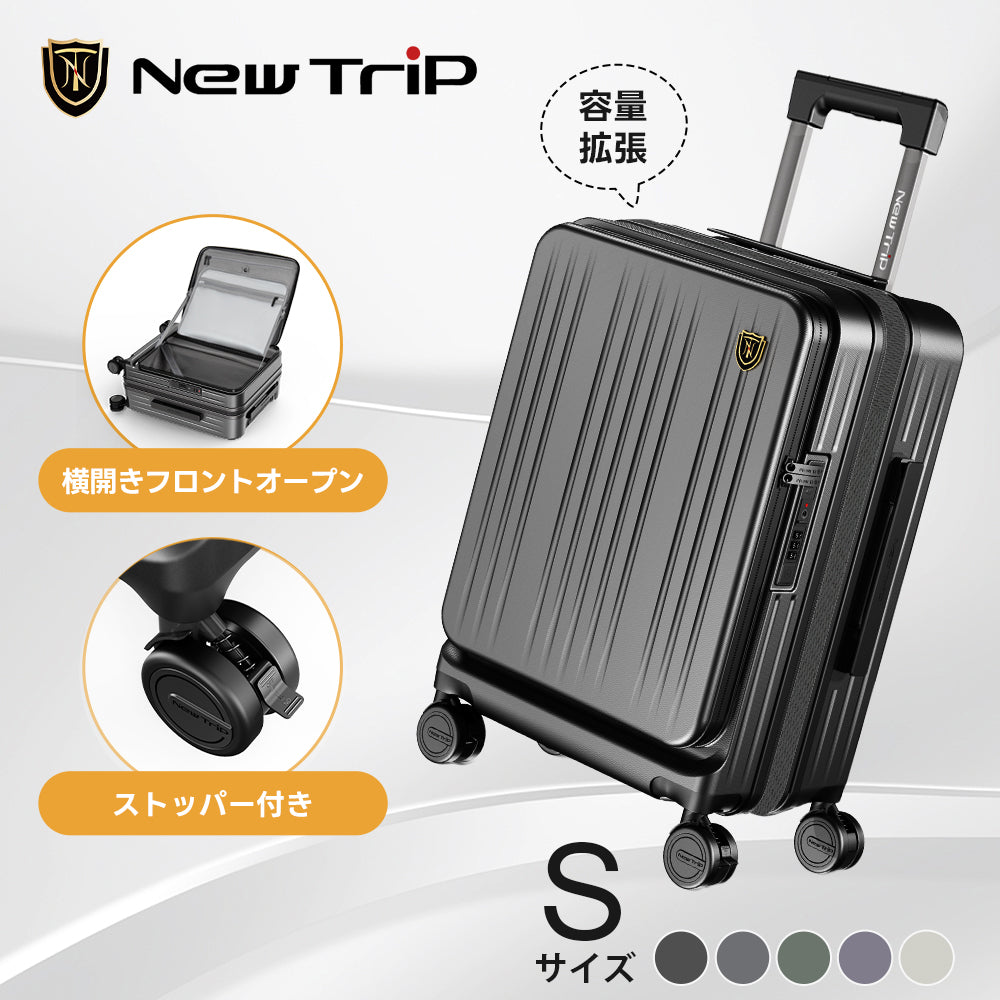
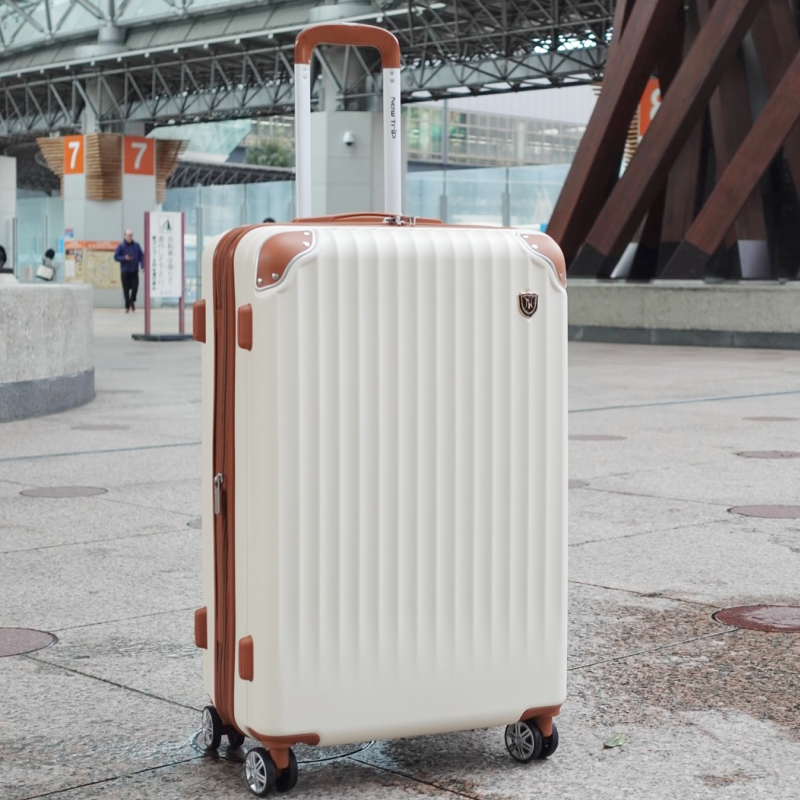
A front-opening type, such as the New Trip 0501,

allows easy access to belongings even while on the move, making it a convenient design for business trips or short getaways.

New Trip 0501 スーツケース

フロントオープン・多機能モデル

New Trip 0501

Sサイズ・40L(拡張後48L)|外寸54*37.5*23cm

横開きフロントオープン 100%PC素材 USB充電ポート ストッパー付き スマホスタンド
Title

七、よくある質問(FAQ)

Q1. 飛行機でスーツケースが壊れることはよくありますか?

A1:空港では多くの荷物が短時間で搬送されるため、キャスターや角部分に強い衝撃が加わることがあります。特に預け荷物では、積み重ねや移動中の接触によって破損が発生するケースがあります。

Q2. 壊れやすいスーツケースの特徴はありますか?

A2:キャスター構造が弱いものや、衝撃に弱い素材を使用したモデルは破損リスクが高くなる場合があります。また、荷物を詰め込みすぎる使い方も故障原因につながります。

Q3. スーツケースのキャスターは修理できますか?

A3:モデルによってはキャスター交換に対応している場合があります。ただし、破損状態や構造によっては修理できないケースもあります。

Q4. 飛行機でスーツケースが壊れた場合は補償されますか?

A4:航空会社によって補償条件は異なります。軽い傷や汚れ、経年劣化と判断される破損は補償対象外になる場合もあります。

Q5. 預け荷物でファスナーが開くことはありますか?

A5:荷物を詰め込みすぎた状態では、搬送中の圧力によってファスナー部分へ負荷がかかることがあります。ベルトを併用することで開きを防ぎやすくなります。

Title

八、まとめ

Suitcases checked on airplanes are subjected to much greater stress than you might imagine due to handling and stacking at the airport.

The casters, zippers, and corners, in particular, are prone to concentrated impact,

and the risk of damage can increase depending on how they are used and how they are packed.


Of course, no suitcase is completely indestructible.

However, by packing with an awareness of weight distribution and choosing a model with durability in mind,

you can significantly reduce the likelihood of problems.


For those who travel frequently by air, it's important to choose a suitcase that suits your travel style, considering factors such as material, caster structure, and storage capacity.