



Categories
Category
Filters
15 products
Suitcase feature comparison
FAQ (Frequently Asked Questions)
How do I choose the right suitcase size?
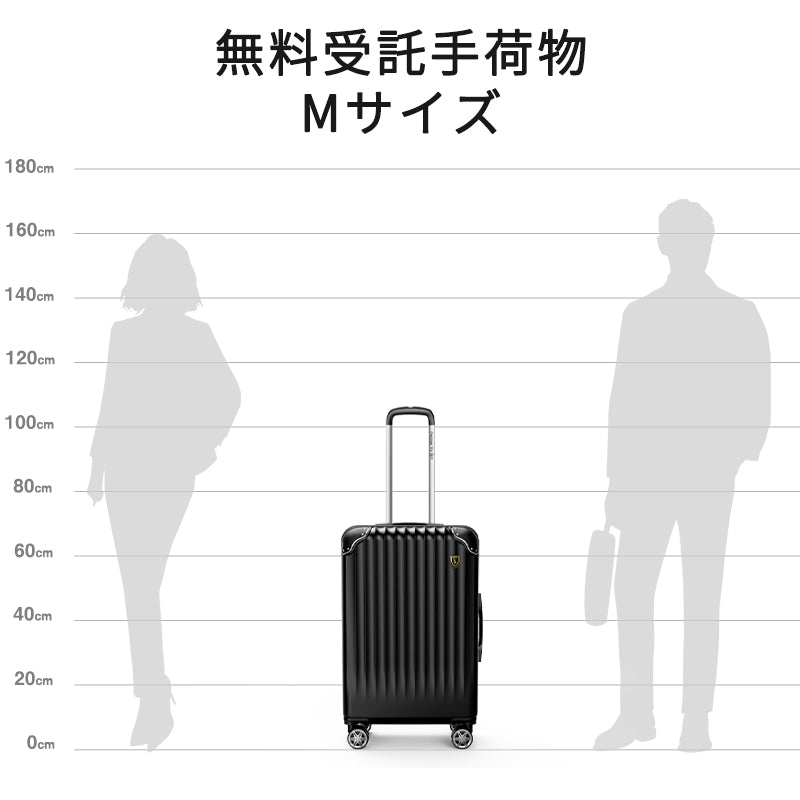
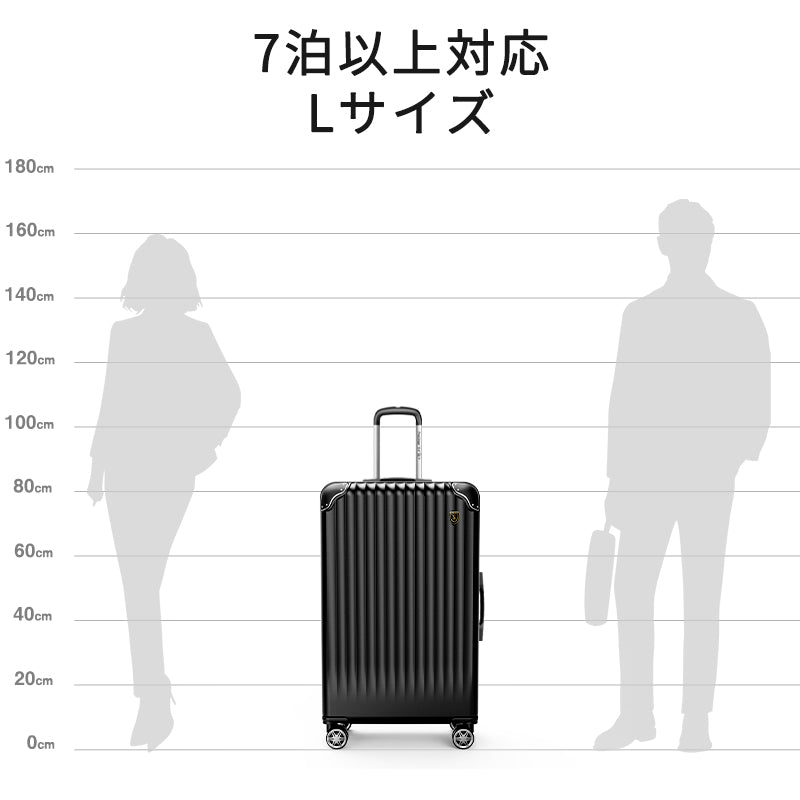
When choosing, the basic principle is to select based on the length of your trip and the amount of luggage. For short trips, a small suitcase of 20-30L is recommended. For medium-length trips, a medium-sized suitcase of 30-50L is suitable. For long trips or when you have a lot of luggage, a large suitcase of 50-70L or more is recommended.
What size is good for a family trip?
For 2 adults and 1-2 children, it's most efficient to consolidate your luggage into one large 70-90L suitcase. You can also add a sub-case depending on the amount of luggage and number of days.
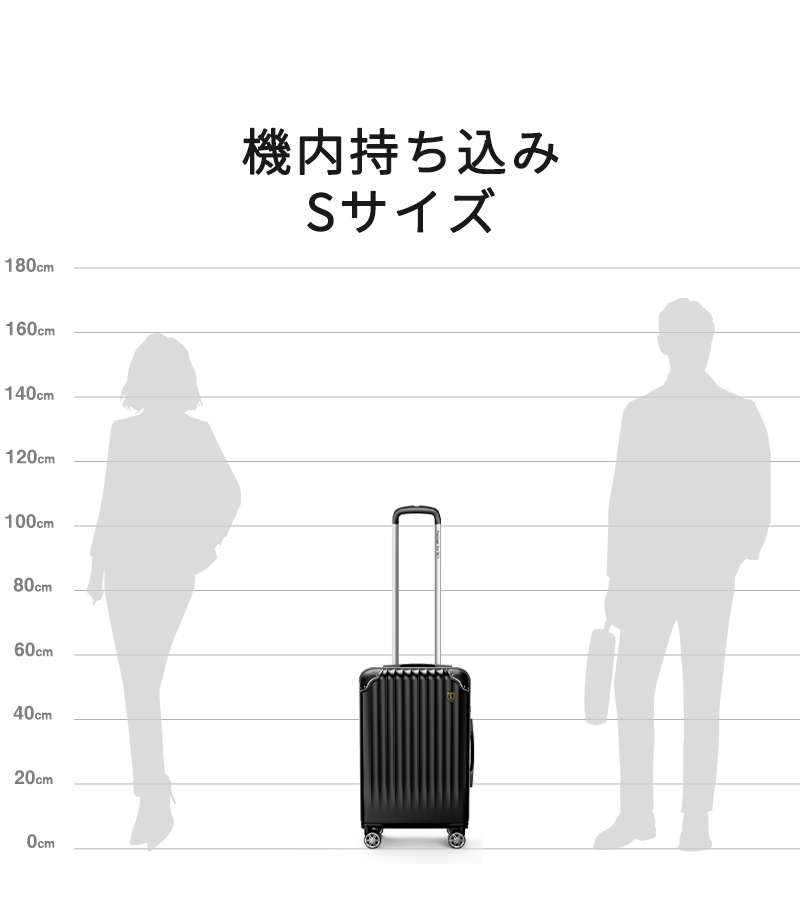
What size is suitable for carry-on?
For domestic flights, a general guideline is a total of 115cm (sum of three dimensions) and a capacity of 20-30 liters. For international flights, restrictions vary by airline, so it's important to check in advance.
Does the suitcase material affect size selection?
Yes. Hard-sided cases (PC/ABS material) keep their shape and protect your belongings, so even if they're a bit smaller, you can rest assured. Soft-sided cases (nylon/polyester) are lightweight and offer flexible capacity, making them easy to carry even in larger sizes.
What are the key features of lightweight, compact, and easy-to-use suitcases?
Beyond just choosing the right size, the maneuverability of the casters, the height adjustment of the handle, and expansion features are also important. Especially for trips involving a lot of movement, selecting a lightweight and easy-to-carry model will ensure a comfortable experience.
Frequently asked questions (FAQ) about choosing the right suitcase size
1. Luggage capacity guidelines by trip duration
The basic rule for choosing a suitcase size is to match it to the length of your trip and the amount of luggage you'll be carrying.
1-2 Day Short Trips: A small suitcase, 20-30L, is recommended. It's carry-on compatible, lightweight, and easy to maneuver.
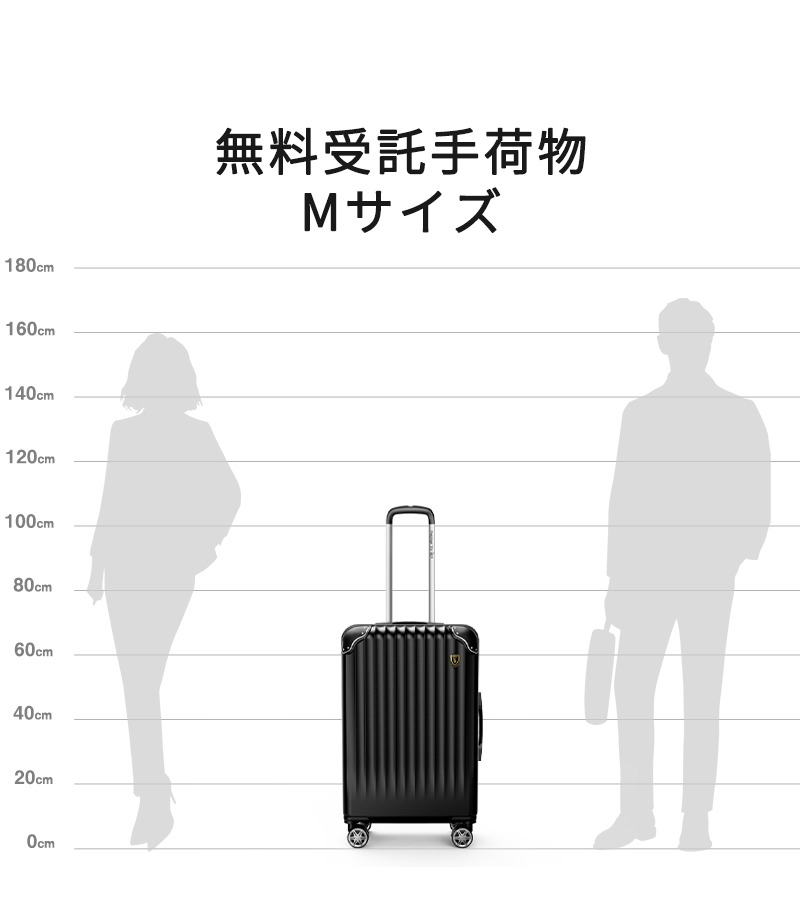
3-5 Day Medium Trips: A medium suitcase, 30-50L, is ideal. It's easy to organize clothes and small items, and convenient for business trips or vacations lasting 2-3 days.
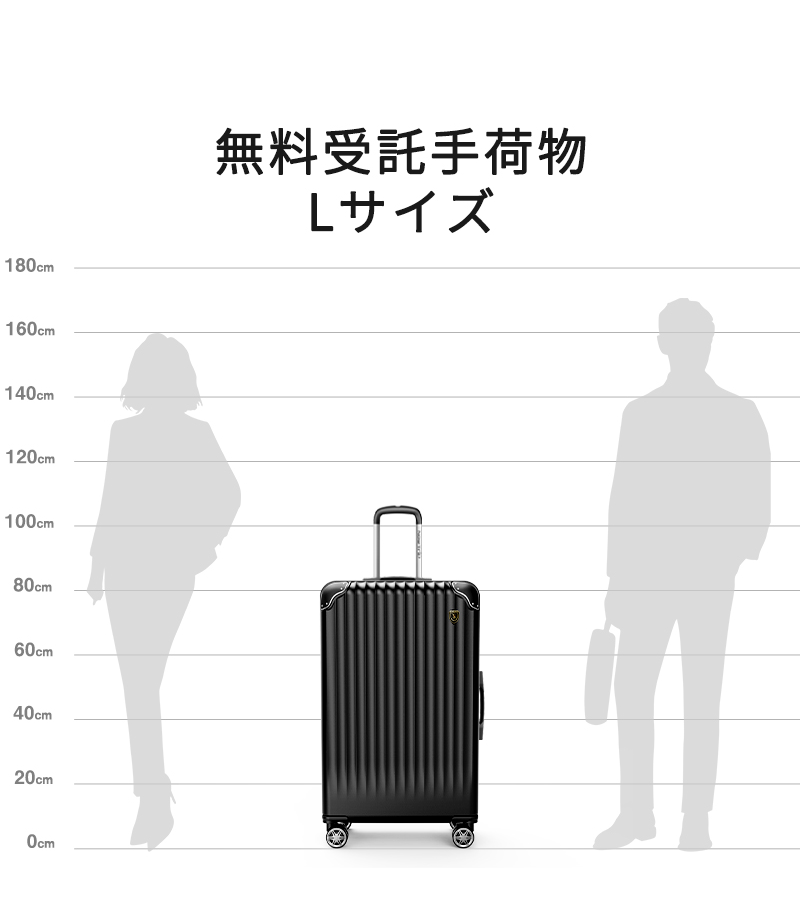
6+ Day Long Trips: A large suitcase, 50-70L or more. A size that allows you to store clothes and souvenirs with plenty of room to spare is reassuring.
Family Trips: One large 70-90L suitcase is efficient for consolidating luggage for 2 adults + 1-2 children.
2. Material and Size Relationship
The material of a suitcase also affects size selection.
Hard Case (PC/ABS material): Resistant to deformation and ideal for protecting clothes and delicate equipment. A key feature is that even if it's slightly compact, it's easy to pack items into.
Soft Case (Nylon/Polyester material): Lightweight and flexible in capacity, making it easy to carry even larger sizes. Many models also offer expandable pockets and dividers for easy organization.
3. Carry-on Size Confirmation
Size restrictions may vary for domestic and international flights.
Domestic flights: Total dimensions within 115cm, approximate capacity 20-30L.
International flights: Varies by airline, so advance confirmation is essential.
4. Tips to avoid making mistakes when choosing a size
Understand Luggage Volume and Travel Days: To prevent insufficient capacity, choose a size based on the amount of luggage you need.
Ease of Movement: Consider portability, such as caster performance and handle height adjustment.
Balance with Material: By choosing materials that prioritize durability, lightness, and storage efficiency, you can organize your belongings effortlessly.
5.Are suitcase sizes (L, M, S, etc.) standardized?
The standards for S/M/L sizes may vary slightly depending on the brand or manufacturer.
For example, an S size from one brand might be 35L, while an S size from another brand might be 40L.
When making a purchase, please check the "liters (L)" and "external dimensions (cm)" to ensure they match your travel duration and airline restrictions. The size chart and reviews on the product page can also be helpful.
6.What are the tips for choosing the right size?
Here are some tips to help you avoid mistakes:
Clarify the purpose : Choose a capacity that suits your purpose, such as business trips, sightseeing, studying abroad, etc.
Check the airline : Check the size and weight restrictions of your frequently used airlines in advance.
Try it out : If possible, try pulling it in person at a store to get a feel for its weight and height.
Consider expansion features : If you can't read the amount of luggage you have, a model that can be expanded by 5 to 10 liters is convenient.
Also, by taking into consideration comments such as "It was smaller than I thought" or "It was surprisingly heavy" in reviews, you can reduce the discrepancy between your image and reality.