
New Trip Updated: 2026.03.24

Carry-on vs. Checked Luggage: Understanding Size Limits, Capacity Guidelines, and How to Choose

Title

When traveling by airplane,

have you ever wondered whether to use a carry-on suitcase or a checked suitcase?


Questions like "Is checking luggage a hassle?" or "Will a carry-on be enough for my belongings?" are common concerns for many people.


To put it simply, the best choice depends greatly on the length of your trip and the amount of luggage you have.

This article will explain, in an easy-to-understand way for beginners, the differences between carry-on and checked suitcases, their pros and cons, airline size and weight restrictions, and how to choose the right one without making mistakes.

table of contents

\500 yen OFF for readers only/

Sign up for New Trip's email newsletter and receive a ¥500 OFF coupon that can be used on all products!

Coupon code: NT500

Simply enter your information on the payment screen, and you can get a great deal on your new travel companion.

Thank you for subscribing!

一、機内持ち込みと預け入れスーツケースの違い

The main differences between carry-on and checked luggage are

"whether or not they can be brought onto the airplane" and "size and weight restrictions."


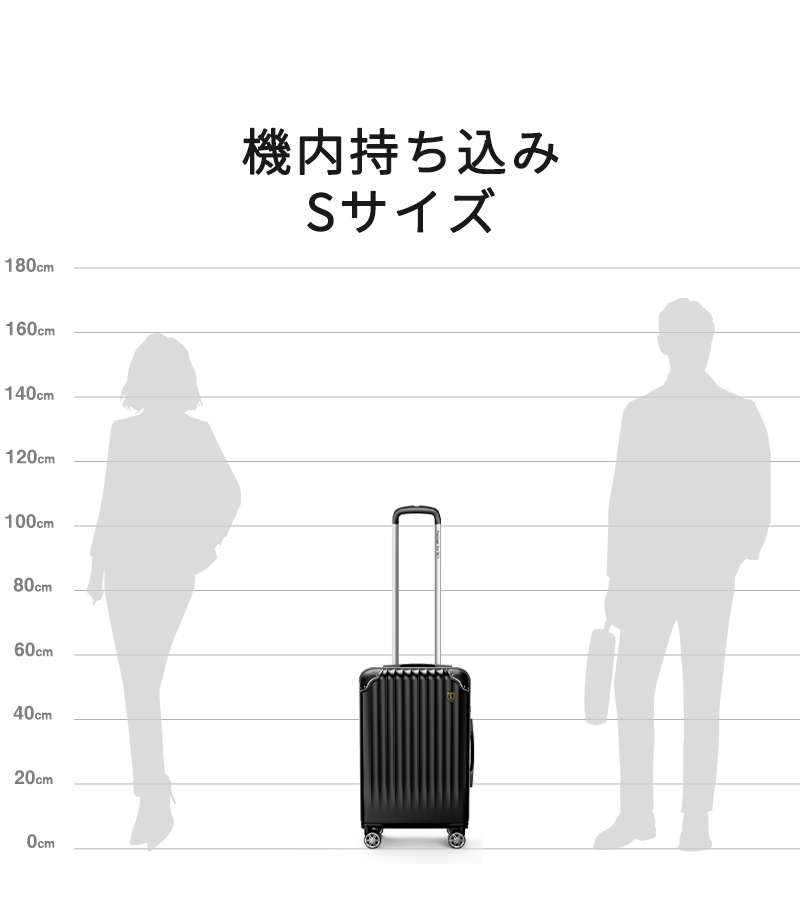
For carry-on luggage, most airlines restrict the size to approximately 115 cm and

the weight to around 7-10 kg.

Therefore, small and lightweight S-size suitcases are most common.


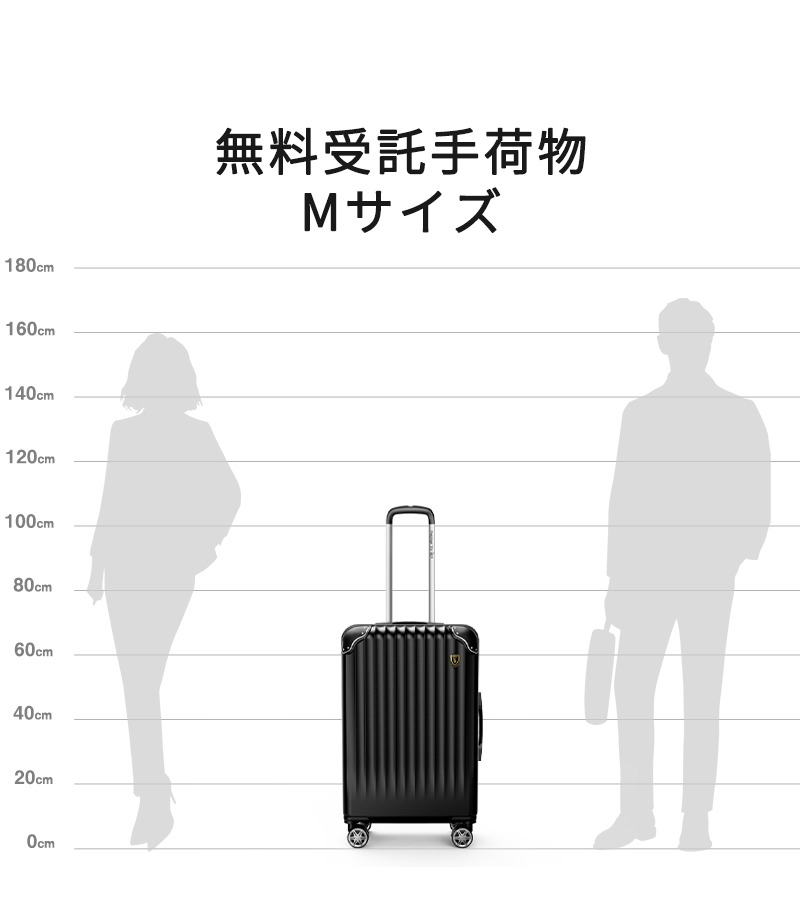
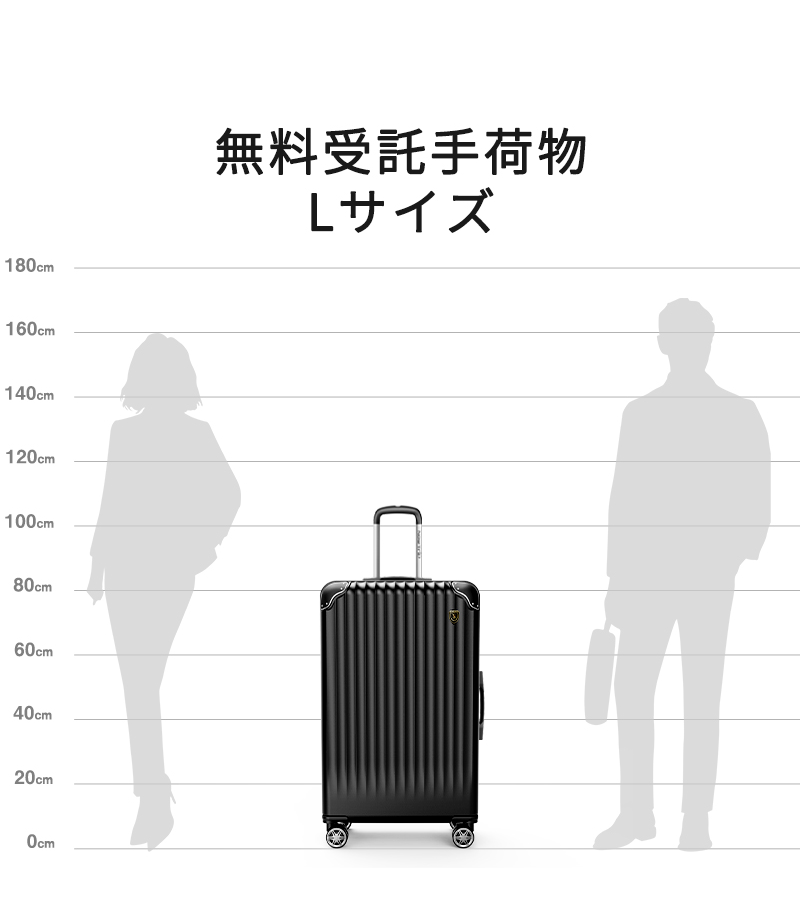
On the other hand, checked luggage generally has more lenient size restrictions,

allowing for large-capacity models such as M-size and L-size suitcases.

However, it is important to note that weight limits (typically 20-23 kg) are imposed,

and exceeding them will incur additional charges.

・機内持ち込みと預け入れスーツケースの違い【比較表】

項目 機内持ち込みスーツケース 預け入れスーツケース
サイズ 約115cm以内 制限は比較的緩い
容量目安 約30~40L 約60~100L以上
重量制限 約7~10kg 約20~23kg
メリット すぐ移動できる・紛失リスク低 大容量・荷物制限が少ない
デメリット 容量が少ない 受け取り時間が必要

・Since the optimal suitcase varies depending on the intended use and travel style, we will explain this in detail in the next chapter.

Title

二、機内持ち込みスーツケースのメリット・デメリット

One of the great attractions of carry-on luggage is that you can get moving as soon as you arrive at the airport.
On the other hand, the style of "having everything at hand" requires a little ingenuity and compromise.
First, let's look at the advantages and disadvantages of traveling light and easily.

・機内持ち込みスーツケースのメリット

  • Saves time at the airport
     No need for baggage drop-off at check-in or collection upon arrival, ensuring a smooth journey.
  • Low risk of lost luggage
     You can always keep your belongings with you, providing peace of mind even on international trips.
  • Often no additional fees
     Especially with LCCs, where checked baggage incurs a fee, this offers a cost advantage.
  • Ideal for short trips and business travel
     Sufficient for trips of about 1 to 3 nights.

・機内持ち込みスーツケースのデメリット

  • Limited capacity (approx. 30-40L)
     Unsuitable for long trips or when carrying a lot of luggage.
  • Strict weight limit (approx. 7-10kg)
     Easily reached if you have many laptops or gadgets.
  • Size regulations vary by airline
     Especially strict on LCCs, so caution is advised.
Title

Choosing a model that is suitable for carry-on luggage can significantly enhance your travel comfort.

If you are looking for models that comply with size and weight restrictions, please check out:
👉 Click here for a list of carry-on compatible suitcases

Title

三、預け入れスーツケースのメリット・デメリット

Checked suitcases are very appealing due to their large capacity and high degree of freedom.

・預け入れスーツケースのメリット

  • Large capacity for ample storage
     Available in M (60-70L) and L (80L+) sizes, suitable for extended trips.
  • Can carry liquids and large items
     Pack without worrying about carry-on restrictions.
  • Reduces burden during transit
     Since it's not carried on board, you'll have less hand luggage, making travel easier.
  • Easily accommodates souvenirs and increased luggage on the return trip

・預け入れスーツケースのデメリット

  • Waiting time at the airport will occur
     It takes time to retrieve luggage after arrival.
  • Risk of loss or damage
     Although infrequent, the possibility of lost baggage is not zero.
  • Weight limit (20-23kg) must be observed
     Exceeding it will incur additional charges.
  • Additional fees are often incurred with LCCs
Title

Especially for trips of 4 nights or more, or international travel,

choosing a large-capacity suitcase significantly increases your packing freedom.

👉 Click here for a list of M and L size check-in suitcases

Title

四、どっちを選ぶべき?【旅行タイプ別】

It's not simply a matter of whether a carry-on or checked suitcase is better; the optimal choice depends on your "travel style, amount of luggage, and travel environment."

① Short trips/business trips (1-3 nights)

Carry-on suitcase recommended

② Medium-term trips (4-7 nights)

Checked (M size) is optimal

③ Long-term trips/international travel (7+ nights)

Combining checked (L size) + carry-on is best

④ If you expect to have more luggage

👉 Checked suitcase is the only option

⑤ For LCC users/cost-conscious travelers

Carry-on is often advantageous

Title

五、預け入れスーツケース選びで失敗しないポイント

When choosing checked luggage, it's important to consider not just the capacity, but also how you'll actually use it.

  • Choose capacity based on "travel days + souvenirs."
     For 4-7 nights, 60-80L is a good guide; for longer trips, 80L or more.
  • Choose a lightweight model (important).
     If the main body is heavy, you'll quickly reach the weight limit.
  • Choose durable materials.
     Polycarbonate or PC+ABS materials are impact-resistant and offer peace of mind.
  • Check for TSA lock.
     This is an almost essential feature for international travel.
  • Check for expansion functionality.
     It's important to be able to accommodate increased luggage on the return trip.
  • Prioritize caster performance.
     Silent casters and models with stoppers make moving around more comfortable.
Title

It's important to choose a suitcase that suits your needs, whether it's a compact model for short trips or a large capacity type for longer journeys. If you want to choose by purpose, please check out these links as well:
👉 "List of Suitcases Suitable for Carry-on" and
👉 "Check-in Suitcases (M/L sizes)".

Title

まとめ

Carry-on suitcases are characterized by their "ease of use and speed,"

while checked suitcases are characterized by their "capacity and peace of mind."

If you're unsure, you can't go wrong using the following criteria:

  • Light luggage → Carry-on
  • Lots of luggage / Souvenirs → Checked
  • International travel → Combination of checked and carry-on

Choosing a suitcase that suits your travel style will significantly improve your travel comfort.

Title

FAQ(よくある質問)

Q1. 機内持ち込みスーツケースと預け入れスーツケースの違いは何ですか?

A1. 機内持ち込みスーツケースは、飛行機内に持ち込める小型サイズ(一般的に115cm以内・7~10kgまで)に制限されたスーツケースです。一方、預け入れスーツケースはチェックイン時に航空会社へ預けるタイプで、より大容量(60L~100L以上)を収納できるのが特徴です。

Q2. 機内持ち込みスーツケースと預け入れスーツケースはどっちが便利ですか?

A2. 短期旅行や出張など荷物が少ない場合は機内持ち込みスーツケースの方が便利です。一方、4泊以上の旅行や海外旅行では、収納力の高い預け入れスーツケースの方が快適に使えます。

Q3. 預け入れスーツケースのサイズ制限はどのくらいですか?

A3. 多くの航空会社では、預け入れスーツケースのサイズは三辺の合計が158cm以内、重量は20~23kg程度が一般的な制限です。ただし、航空会社や運賃プランによって異なるため、事前確認が重要です。

Q4. 機内持ち込みスーツケースのサイズ制限は?

A4. 一般的には三辺合計115cm以内(例:55×40×25cm)かつ重量7~10kg以内が目安です。LCCではさらに厳しい場合があるため注意が必要です。

Q5. 機内持ち込みと預け入れは併用できますか?

A5. はい、多くの航空会社では機内持ち込みスーツケース1個+身の回り品1点に加えて、預け入れスーツケースを利用することが可能です。特に海外旅行ではこの併用が一般的です。

Q6. 預け入れスーツケースは何リットルがおすすめですか?

A6. 旅行日数によって異なりますが、4~7泊であれば60~80L、7泊以上の長期旅行では80~100L以上の預け入れスーツケースが目安です。