


"My brand new suitcase got scuffed when I checked it on a plane."
"Is this a defect?"
"Are suitcases really this prone to scratches?"
Many people have these concerns.
In short, suitcases will get some scratches with use. Small scuffs are not uncommon, especially when checked on a plane or from contact during transport.
What's important is not to "eliminate all scratches," but to "choose a suitcase that is less prone to scratches and where scratches are less noticeable."
In this article, the New Trip editorial team will clearly explain the main causes of suitcase scratches, how to choose models where scratches are less noticeable, tips for preventing scratches, and when repairs are necessary.
【Conclusion】Suitcase scratches are largely unavoidable
Suitcases are subjected to various impacts and friction during travel.
For example, when checking a suitcase on a plane, it is sent from the check-in counter to a conveyor belt, travels through airport handling facilities, and is loaded into the cargo hold. During this process, it may come into contact with other luggage or rub against the floor or facilities, causing small scuffs.
Furthermore, scratches are not uncommon outside of air travel, such as during hotel transfers, loading and unloading from taxis or cars, on stairs at stations, or on cobblestone streets.
Therefore, small scuffs and hairline scratches can be considered within the scope of normal use. It is particularly difficult to keep a checked suitcase completely scratch-free.
📚 Editor's Note: Since it's difficult to completely prevent scratches, it's important to choose a model that is not only "scratch-resistant" but also where "scratches are less noticeable."

Main causes of suitcase scratches
Scratches on suitcases can occur in various situations during travel. Let's look at the typical causes.
Checked luggage on airplanes
The most common cause of scratches is checking luggage on airplanes. At airports, many pieces of luggage are transported together, so scuffs can occur from contact with other suitcases or friction with handling equipment.
Contact with other luggage
Even on trains, buses, or in hotel lobbies, your luggage can bump into other travelers' bags. It's not uncommon to accumulate small scratches in crowded places without realizing it.
Cobblestones and steps
In many overseas travel destinations, there are cobblestone streets, which can cause the body's corners or bottom to rub, not just the casters. Forcibly dragging the suitcase over steps can also lead to scratches.
Loading and unloading from cars
When loading a suitcase into the trunk of a taxi or private car, the corners or sides may hit the car interior or the ground, causing scuffs or dents.
Storage methods
If other luggage is stacked on top of your suitcase when stored after a trip, or if it's stored in contact with hard objects, scuffs or pressure marks may remain on the surface.
As you can see, the causes of scratches are not limited to airplanes. Even daily travel and storage methods can gradually increase scratches.

It's not just about scratch resistance. Choose a suitcase where scratches are less noticeable.
When choosing a suitcase, it's important to consider not only "is it scratch-resistant?" but also "are scratches less noticeable?"
No matter how durable the material, some scuffs are unavoidable with use. That's why it's crucial to choose based on a comprehensive view of the material, surface finish, color, and body shape.
① Choose by material
Suitcase materials mainly include polycarbonate (PC), PC+ABS, and ABS resin. Each has different characteristics, and thus, different strengths against scratches and durability.
| Material | Features | Best for |
|---|---|---|
| Polycarbonate (PC) | Lightweight, impact-resistant, less prone to cracking. A durable material for long-term use. | Frequent international travelers/business trips |
| PC+ABS | Good balance of lightness, durability, and price. | Various travel styles |
| ABS resin | Lightweight and affordable, but slightly less impact-resistant than PC. | Short trips/infrequent use |
If you travel frequently or check luggage often, polycarbonate or PC+ABS materials, which offer excellent impact resistance, are recommended.
👉 Decision criterion: If you want to reduce scratches, check not only the price but also the material's durability.
② Choose a surface finish where scratches are less noticeable
Actually, whether scratches are "noticeable" changes significantly depending on the surface finish, more so than whether they "occur."
| Finish | Features |
|---|---|
| Embossed | ◎ Because it has an uneven surface, small scuffs and hairline scratches are less noticeable. |
| Brushed | ○ Hairline texture disperses light, making signs of use less noticeable. |
| Matte | ○ Reduces light reflection, making scuffs and fingerprints less noticeable. |
| Glossy | △ Has a luxurious feel, but small hairline scratches and scuffs are easily visible. |
For example, the dotted embossed finish of the New Trip 0201 makes small scuffs from daily use less noticeable. This helps maintain a clean appearance.
Also, matte models with fine textures like the New Trip 0501 can suppress light reflection, making them easier to keep looking good for a longer time.
On the other hand, a glossy finish offers a luxurious feel, but it reflects light, making even small hairline scratches more visible. Those who prioritize appearance should be mindful of this.
③ Choose by color
Color significantly affects how visible scratches and dirt are.
Black offers a luxurious look, but white scuff marks tend to be very noticeable on it.
Conversely, mid-range colors like silver, gray, or dark gray tend to blend small scratches and dirt, making them relatively less conspicuous.
While white and ivory offer a bright, clean impression, black scuff marks are easily visible. If you're concerned about scratches, choosing a slightly colored option like beige or champagne gold might be easier to manage.
📚 Editor's Note: If you're concerned about scratches, gray, navy, or champagne tones are recommended over black or glossy white.
④ Choose by body shape
The body shape also influences how scratches occur and how visible they are.
Suitcases with rounded corners tend to disperse impact, making corner scratches less noticeable.
Additionally, designs with ribs (grooves) or textures on the body make scuffs appear more dispersed than on flat surfaces, making small scratches less bothersome.
Furthermore, models with corner protectors or aluminum frames can reduce impact on the corners, making them recommended for those who want to use their suitcase for a long time.
In other words, if you are concerned about scratches, choosing a suitcase that considers not only the "material" but also the "surface finish," "color," and "body design" will help maintain its appearance for longer.

How to prevent scratches as much as possible
While it's difficult to completely eliminate scratches on a suitcase, you can reduce small scuffs and impacts by slightly adjusting your daily habits.
① Use a suitcase cover
If you frequently check your suitcase on a plane, using a suitcase cover is recommended. It can reduce surface scuffs and dirt, and transparent types can protect the design without hiding it.
② Avoid dragging over steps
Forcibly dragging your suitcase over stairs or steps can easily cause scratches on the bottom and corners. When possible, use the top or side handles to carry it carefully.
③ Avoid stacking too much luggage
Stacking heavy luggage on top during storage can leave scuffs and pressure marks on the surface. Storing it upright as much as possible can reduce stress on the body.
④ Check the condition before checking in at the airport
It's reassuring to take photos with your smartphone before checking your suitcase on a plane. In the event of significant damage, these photos can serve as a record when consulting with the airline.
⑤ Wipe off dirt after use
After your trip, wipe the surface with a dry, soft cloth to remove sand and dust. Storing it with dirt can cause small scuffs during the next use.
📚 Editor's Note: While it's impossible to completely prevent scratches, "handling with care," "protecting it," and "optimizing storage methods" can help maintain its appearance.

Are these scratches okay? When to consider repairs
Some suitcase scratches are fine to continue using, while others should prompt consideration for early repair or replacement.
| Type of Scratch/Damage | Action |
|---|---|
| Scuffs | OK as is |
| Hairline scratches | OK as is |
| Surface dirt/black marks | Wipe to clean |
| Cracks | Consider repair |
| Breaks | Consider repair or replacement |
| Caster damage | Consider repair |
| Zipper malfunction | Consider repair |
| Loose handle | Consider repair |
If there are only surface scuffs or minor hairline scratches, they are often within the scope of normal use, and it's usually fine to continue using the suitcase as is.
On the other hand, if there are cracks in the body, or if the casters, zippers, or handles are malfunctioning, it can affect the luggage protection and ease of movement. To prevent issues during your trip, consider repair or replacement of parts as soon as possible.
Especially, casters are the parts of a suitcase that bear the most load. If they make strange noises or wobble, it's safer to repair them than to continue using them as is.
📚 Editor's Note: Don't worry about cosmetic scratches. If there is damage affecting the function of protecting luggage or its mobility, consider repair or replacement.

3 Recommended Suitcases for Those Concerned About Scratches
Here, the New Trip editorial team introduces three models that are recommended with a focus on the balance between "less noticeable scratches" and "ease of use."
If you prioritize less noticeable scratches|New Trip 0201
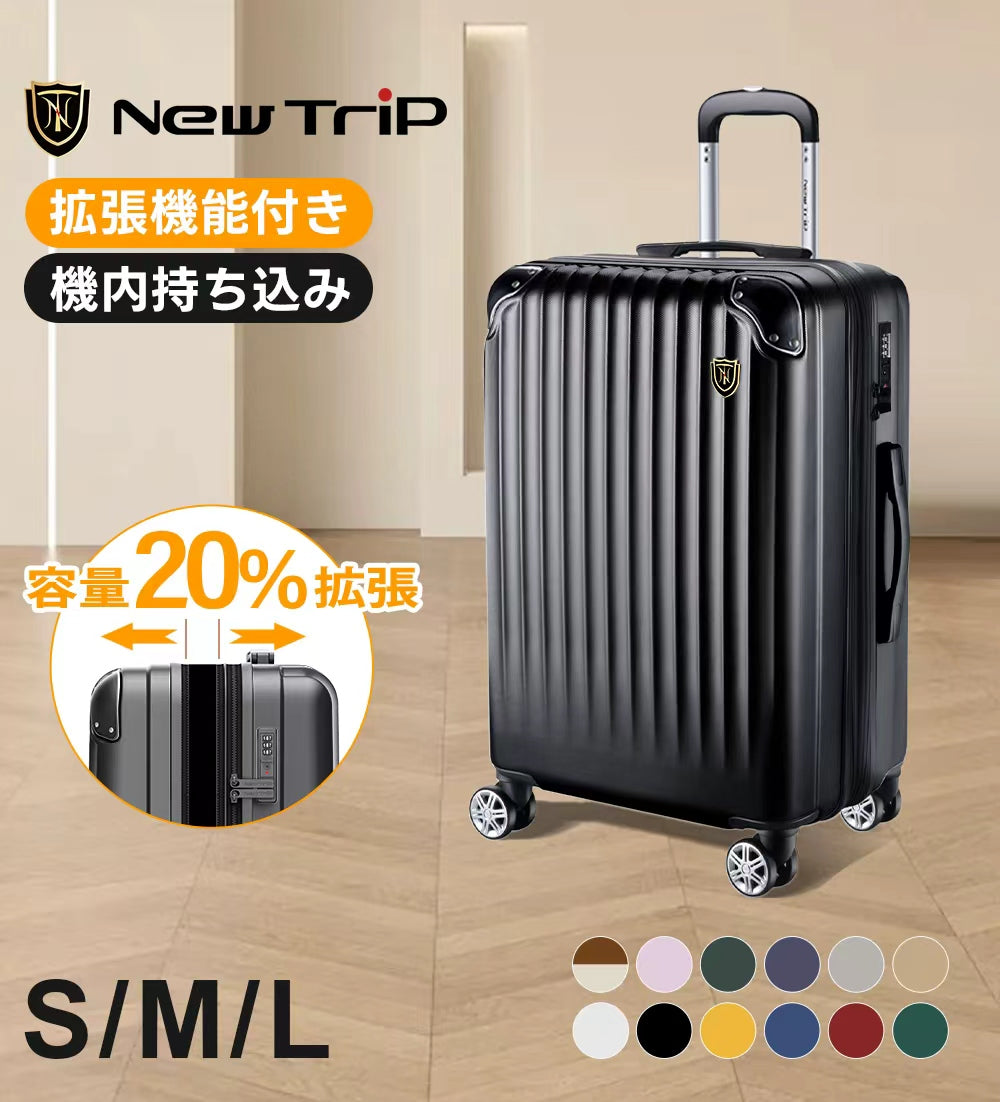
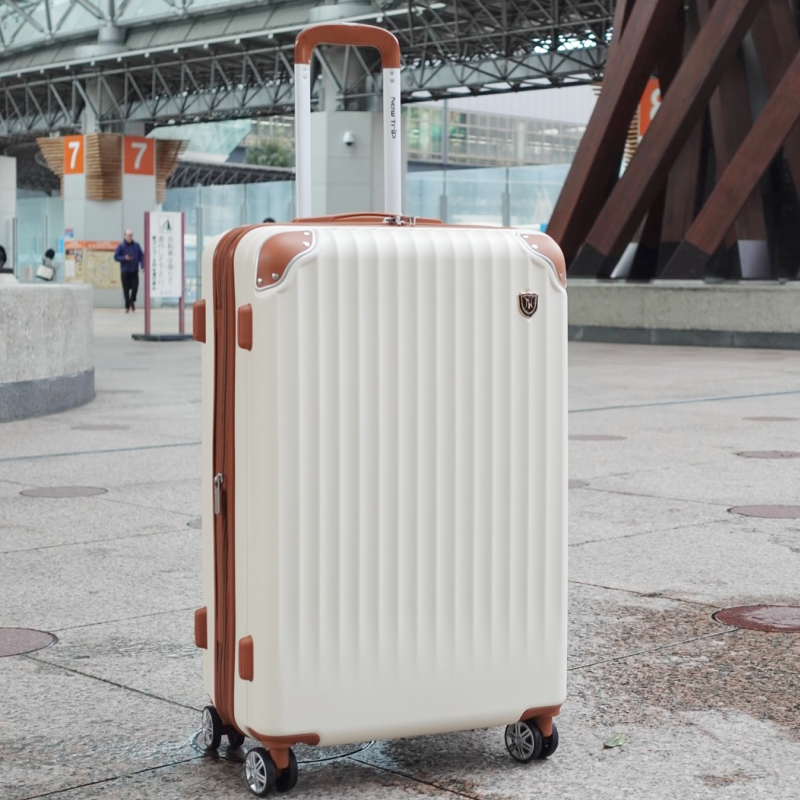
The New Trip 0201 is a model with a fine dot-patterned surface design. The textured surface finish makes small scuffs and hairline scratches less noticeable, helping to maintain a clean appearance even after many trips.
Made with PC+ABS material, it offers an excellent balance of lightweight and durability. It also features an expansion function, allowing flexibility for increased luggage when you buy souvenirs, for example.