
New Trip Editorial Department   Updated: May 13, 2026

Can I Use a USB-Equipped Suitcase on an Airplane? Explaining Carry-on and Checked Baggage Precautions

Title

When many people buy a suitcase with a USB port, they often have these concerns:

"Can I bring a suitcase with a USB port on a plane?"
"Is it okay to check it in as luggage?"
"Will I be stopped or have it confiscated at the airport?"

In recent years, as people use smartphones and tablets more often while traveling, suitcases with USB charging ports have become increasingly popular. However, airline rules regarding mobile batteries and lithium-ion batteries have become stricter year by year, and not understanding them correctly can sometimes lead to trouble at the airport.


A particularly important point to note is "whether the mobile battery can be removed." Even with USB-equipped suitcases, the handling for carry-on or checked luggage may change depending on the battery's specifications.


This article will clearly explain whether USB-equipped suitcases can be used on airplanes, precautions for carry-on and checked luggage, and points to confirm before traveling.

Title

Table of Contents

\Exclusive Reader Offer: ¥500 OFF/

Sign up for the New Trip newsletter and receive a ¥500 OFF coupon valid on all products!

Coupon Code: NT500

Simply enter it at checkout to get your new travel companion at a discounted price.  

Thank you for registering!

一、結論:USB付きスーツケースは飛行機で使える?条件付きでOK

To get straight to the point, suitcases with USB ports can be used as carry-on or checked baggage, as long as they are models with removable lithium-ion batteries.

However, an increasing number of airlines, including JAL and ANA, are refusing to allow "smart suitcases with integrated (non-removable) batteries" onboard or as checked luggage. It is essential to check before purchasing and before departure.

機内持ち込みの場合

In general, you can bring the device with the battery attached in your carry-on. It's treated the same as devices with lithium-ion batteries (smartphones, portable chargers, etc.), so there's no problem as long as it fits under your seat or in the overhead compartment.

However, the following conditions must be met:

  • Battery capacity must be 160Wh or less
  • It must fit within carry-on size limits (total dimensions of 115cm or less)

It must comply with the airline's smart luggage policy.

* Batteries exceeding 100Wh but not more than 160Wh may require prior airline approval. Most commercially available suitcase batteries are 100Wh or less, so this is usually not an issue.

預け入れ荷物の場合

Caution is advised when checking in luggage.

The general rule is to remove the battery from the device and carry it with you as a carry-on item.

  • ✅ Models with removable batteries → OK to remove and check in
  • ❌ Models with integrated batteries → Cannot be checked in (may be denied boarding)

This is because if a battery ignites in the cargo hold, flight attendants cannot respond immediately.

【早見表】USB付きスーツケースの利用可否

シーン バッテリー取り外し可 バッテリー一体型
機内持ち込み ⭕️ そのまま可 △ 航空会社による
預け入れ ⭕️ 外せば可 ❌ 不可が主流
国際線 ⭕️(要確認) ❌ ほぼ不可

💡 New Trip Staff Experience

When our staff member used JAL international flights (Narita to Singapore) in December 2025, they were asked at the check-in counter, "Have you removed the battery?" Since it had been removed beforehand and placed in their backpack, they passed through smoothly. However, at the next counter, we saw someone struggling because they didn't know how to remove it.

We recommend checking how to remove the battery before departure.

Title

二、なぜ注意が必要?リチウムイオンバッテリー問題

Many people must be wondering, "It's so convenient, so why are there such strict rules?" Knowing the reasons behind this can help you prevent trouble at the airport.

リチウムイオンバッテリーの発火リスクとは

Why are lithium-ion batteries viewed with such caution? There are three main reasons:

  • Risk of Thermal Runaway
    Lithium-ion batteries can experience a chain reaction of self-heating, reaching temperatures of several hundred degrees Celsius, triggered by internal short circuits, overcharging, or physical impact. Once thermal runaway begins, re-ignition often occurs even after the fire is extinguished, making it difficult to deal with using standard fire extinguishers.
  • Delayed Fire Suppression in Cargo Holds
    In the cabin, flight attendants can immediately detect a fire and handle it with specialized fire suppression kits (for lithium batteries). However, if a fire starts in the cargo hold, there's a possibility no one will notice it during the flight. This is the primary reason for the rule "remove batteries when checking luggage and carry them in the cabin."
  • Actual Number of Incidents
    According to official statistics from the U.S. Federal Aviation Administration (FAA), over 700 incidents of smoke, fire, or thermal runaway caused by lithium batteries have been reported on aircraft from 2006 to 2026. This number has been increasing in recent years at a rate of over 60 incidents per year, largely due to the widespread use of portable chargers and smart devices.
Title

三、【航空会社別】USB付きスーツケースの持ち込みルール

Although the basic rule (detaching the battery is essential) is common, the detailed operating rules actually differ for each airline. Particularly with LCCs and foreign airlines, there are cases where unique restrictions are in place. Here, we have compiled a list focusing on airlines frequently used by Japanese travelers.

主要航空会社 比較早見表

航空会社 機内持ち込み 預け入れ(バッテリー取り外し時) バッテリー一体型 容量上限
JAL ⭕可 ⭕可 ❌不可 160Wh以下
ANA ⭕可 ⭕可 ❌不可 160Wh以下
Peach ⭕可 ⭕可 ❌不可 160Wh以下
Jetstar Japan ⭕可 ⭕可 ❌不可 160Wh以下
ZIPAIR ⭕可 ⭕可 ❌不可 160Wh以下
United(米系) ⭕可 ⭕可 ❌不可 100Wh以下推奨
Lufthansa(欧州系) ⭕可 ⭕可 ❌不可 100Wh以下推奨
Singapore Airlines ⭕可 ⭕可 ❌不可 100Wh以下推奨

*Information as of May 2026. Please check the official website of each airline for the latest rules.

⚠️ Always check the official website for the latest information.

Rules in the airline industry are frequently updated, so please always check the latest information on the official website of your airline before departure.

For example, JAL's specific restrictions on lithium-ion batteries are as follows:

  1. Those with a Watt-hour rating of 100Wh or less
    Only allowed in carry-on baggage. There is no quantity limit.
  2. Those with a Watt-hour rating exceeding 100Wh and up to 160Wh
    Only allowed in carry-on baggage. A maximum of 2 items, including mobile batteries.
  3. Those with a Watt-hour rating exceeding 160Wh
    Neither carry-on nor checked baggage is allowed.
Title

四、飛行機で使う前にチェック!4つの注意点

By now, you should understand the "rules." Next, I will explain specifically what you need to do before your trip and at the airport. If you keep these four points in mind, you can almost entirely prevent problems at the airport.

①バッテリーが取り外せるか確認する

The most important point is to check whether your USB-equipped suitcase is a "removable battery type."

How to Check

  1. Check near the USB port or charging port on the exterior or interior of the suitcase.
  2. Look for a pocket or cover labeled "Battery" or "Power Bank."
  3. Check if there is a battery storage compartment that opens and closes with a zipper or Velcro.
  4. Check the instruction manual or original packaging for "Removable Battery" notation.

What if it's not removable?

Unfortunately, smart suitcases with integrated batteries are extremely difficult to use on airplanes under current regulations. Here are some possible solutions:

  • 🚗 Use it exclusively for domestic travel (train/car)
  • 🔁 Consider purchasing a model with a removable battery

②バッテリー容量(Wh)を把握する

Batteries are labeled with capacity in "Wh (watt-hours)." Check to ensure it does not exceed the 100Wh or 160Wh limits.

How to check Wh

  • Printed on the side or back of the battery itself
  • Many commercially available batteries for suitcases are around 5,000–10,000mAh (approx. 18–37Wh)

If there is no Wh display and only mAh and V (voltage), calculate using the following formula:

Wh = mAh × V ÷ 1,000

Example: 10,000mAh × 3.7V ÷ 1,000 = 37Wh


Quick reference chart for handling by capacity

バッテリー容量 機内持ち込み 預け入れ 備考
100Wh以下 ⭕可 △機器内蔵のみ可 個数制限なし
100Wh超〜160Wh以下 ⭕️要承認 △要承認 1人2個まで
160Wh超 ❌不可 ❌不可 貨物便のみ可

👉 General commercially available suitcases with USB ports are almost always under 100Wh, so there are usually no issues. However, batteries without a capacity display may be rejected by airlines, so it is important to choose products with a clear Wh表記 (Wh rating).

③預け入れ時はバッテリーを機内に持ち込む

These are the golden rules for checking in your suitcase.

Correct Procedure

  1. Remove the battery after arriving at the airport, before getting in line at the check-in counter.
  2. Place the removed battery inside your carry-on baggage (backpack, handbag, etc.).
  3. Check in the suitcase with the battery compartment empty.

Why this timing?

If you try to remove it just before check-in, you risk inconveniencing passengers behind you or losing parts in a rush. It's recommended to take your time and remove it in an airport lounge or waiting area.

④海外旅行では航空会社・経由地ごとに事前確認

While rules are largely standardized for both major airlines and LCCs on domestic flights, caution is advised for international travel (especially connecting flights).

Three Key Points to Check

(1) Rules of all airlines used

Example: For Narita → Hong Kong (Cathay Pacific) → London (British Airways), you need to check the rules of both airlines. It is safer to follow the stricter of the two.

(2) Regulations at transit points and destinations

Some countries (e.g., Middle East, Southeast Asia) may have their own restrictions on lithium-ion battery transport.

(3) Rules for the return flight

There have been cases where something was allowed on departure but flagged by an international airline on the return journey. When booking round-trip tickets, it's essential to also check the rules for the return flight.

When to inquire

  • Up to 48 hours prior to departure: Confirm via airline chat or phone
  • Up to 24 hours prior to departure: Reconfirm during online check-in
  • Upon airport arrival: Final confirmation at the check-in counter
Title

五、おすすめ:飛行機対応のUSB付きスーツケースの選び方

When choosing a suitcase with a USB port, you need to consider not only "convenience" but also whether it can be "used on an airplane without issues." Here are three key points to check before purchasing.

①バッテリー取り外し可能モデルを選ぶ

When choosing a suitcase with a USB port, the most important factor is whether the battery is removable.

As explained in the previous section, airline rules generally state that "suitcases with non-removable batteries cannot be checked." On the other hand, if you choose a model with a removable battery, you can carry the battery as hand luggage, allowing you to both check the suitcase and carry it on board.

💡 Point: "With USB charging port" and "with built-in battery" are not the same thing. Models with only a USB port and no built-in battery are not subject to battery-related rules in the first place, making them easier to use (see FAQ for details).

②容量・サイズの目安(機内持ち込みサイズ = 3辺合計115cm以内)

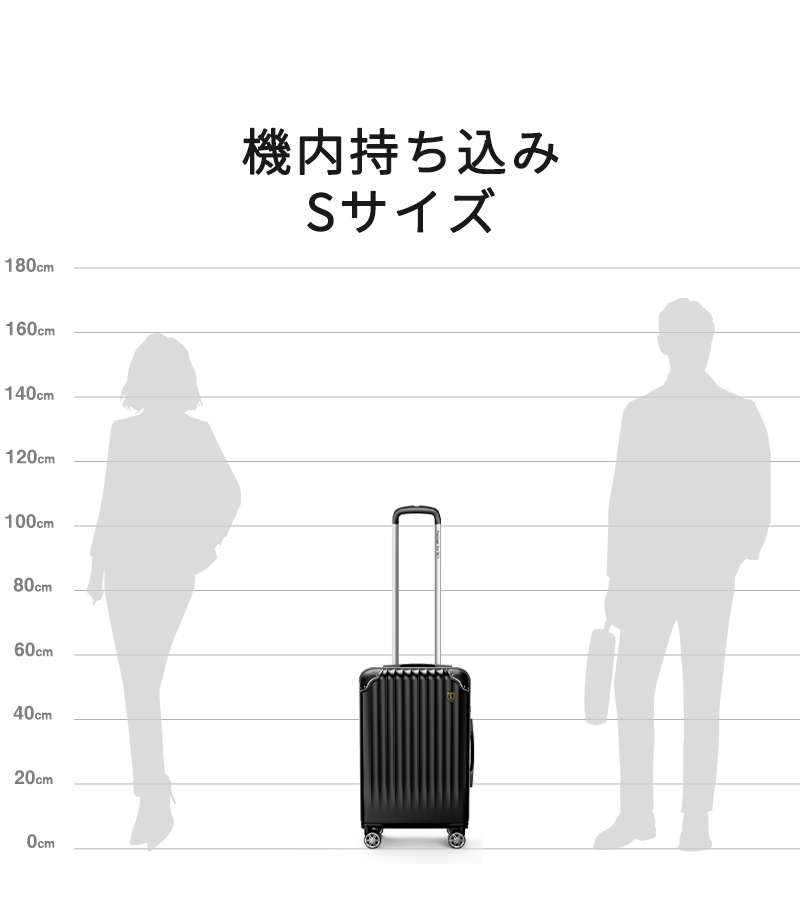
Even if you choose a suitcase with a USB port, if its size exceeds carry-on regulations, you will have no choice but to check it. While you can remove the battery and check the bag, for travel convenience, it's recommended to choose a size that is allowed as a carry-on.

As a general guide for capacity, a suitcase around 30-40L is a convenient size for carry-on. This provides ample storage for short trips of about 1-3 nights.

③TSAロック付きだと海外でも安心

When checking luggage for international travel, some countries, including the United States, may open and inspect bags for security purposes. With a standard lock, there's a risk of damage to your suitcase if inspectors try to force it open.

This is where a TSA lock comes in handy. TSA locks are designed so that U.S. Transportation Security Administration (TSA) officers can open them with a special master key, allowing you to check your bag while locked, significantly reducing the risk of damage.

If you're planning international travel, we strongly recommend choosing a model equipped with a TSA lock.

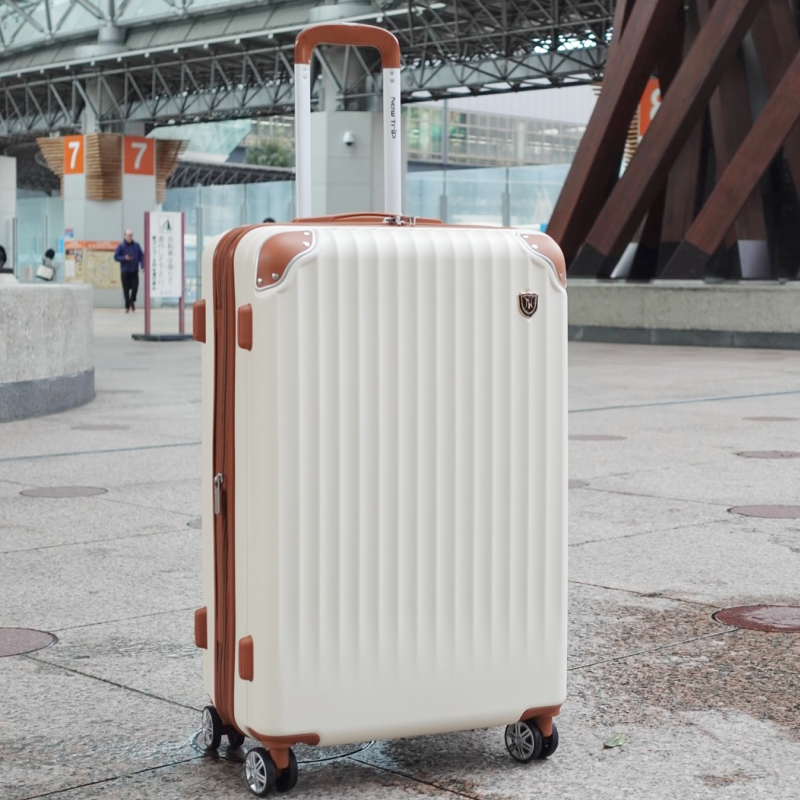
New Trip 0702 Plus ― 飛行機対応の機能をひとつにまとめた一台

Allow us to introduce the New Trip 0702 Plus, a suitcase that meets all the criteria we've discussed so far.

Recommended for:

  • Those who want to travel smart on business trips or short trips
  • Those looking for an all-round suitcase that can be used both domestically and internationally
  • Those who want to balance design and functionality

Main features

With its optimized front-open design, retrieving items on the go is smooth and easy. Plus, with a USB / TYPE-C charging port, you can quickly charge your smartphone or earphones. For added peace of mind when checking luggage for international travel, it also features a TSA008 lock, allowing you to pass through inspections while locked. Additionally, casters with stoppers prevent accidental tipping on inclines or inside trains.

New Trip 0702Plus スーツケース

USBポート付き・機内持ち込みモデル

New Trip 0702Plus

Sサイズ・42L|外寸54*35*24cm

フロントオープン ABS+PC素材 USB充電ポート ストッパー付き TSA008ロック

💡 About the USB charging port: The 0702 Plus is equipped with a charging port only, and does not have a built-in battery. You can charge it by placing a mobile battery inside the suitcase and connecting the cable to the port.

Title

六、よくある質問(FAQ)

Q1. USB付きスーツケースは預け荷物にできますか?

A1:モバイルバッテリーを取り外せるタイプであれば、スーツケース本体を預けられる場合があります。ただし航空会社によってルールが異なるため、事前確認が必要です。

Q2. モバイルバッテリー内蔵型は飛行機で使えますか?

A2:一部の航空会社では制限される場合があります。取り外し可能タイプの方が機内持ち込みしやすい傾向があります。

Q3. USBポート付きスーツケースだけで充電できますか?

A3:多くの製品では内部にモバイルバッテリーを接続する必要があります。USBポート単体では給電できません。

Q4. 海外旅行でもUSB付きスーツケースは便利ですか?

A4:空港での待機時間や移動中にスマートフォンを充電しやすく、海外旅行や出張で特に便利です。

Title

七、まとめ

In this article, we've explained the questions and precautions regarding the use of suitcases with USB ports on airplanes. Let's review the key points one last time.

  • If the battery is removable, it can be taken as a carry-on or checked luggage.
  • The basic guidelines are a battery capacity of 160Wh or less, and a total dimension of 115cm or less (sum of 3 sides).
  • Choose a model with a TSA lock and only a charging port for peace of mind.

New Trip offers suitcases that comply with airline rules while making your travels more comfortable. Enjoy your trip with items that balance functionality, design, and ease of use.