Complete Guide to Airport Baggage Drop-off: Weight Limits, Prohibited Items, and Additional Fees Explained

  • New Trip

Updated: 2025.09.11

Title

Have you ever encountered unexpected trouble with "baggage check-in" at the airport before departing on a trip?


Many people have experienced something like their "suitcase being overweight and being charged a high additional fee" or "liquids being confiscated" at least once. By understanding the rules in advance, you can prevent such troubles and start your journey smoothly.


This article explains the differences between domestic and international flights, size and weight restrictions, items to be careful of, and the check-in process for beginners. We also introduce New Trip's recommended suitcases.

"For Respect for the Aged Day, give the gift of safe and comfortable travels."
👉Check out the New Trip Campaign now and get up to 47% off!

Table of Contents

1. Basic Rules for Baggage Check-in

Title

Airlines have strict regulations regarding the weight and size of checked baggage. Understanding and adhering to these regulations is the first step to avoiding additional fees and travel inconveniences.

1. Differences Between Domestic and International Flights

Baggage check-in rules vary significantly between domestic and international flights.

Domestic Flights (for ANA and JAL)

 ・Generally, free checked baggage is limited to 20kg per bag (for aircraft with 100 or more seats in total). For smaller aircraft with fewer than 100 seats, the limit may be restricted to 15kg. The size limit is a total of 203cm for length, width, and height.


LCCs (Low-Cost Carriers)

 ・For LCCs such as Peach, Jetstar, and Vanilla Air, checked baggage is often not included in the basic fare and must be added as a paid option. While a 20kg weight limit is common, some airlines only permit up to 15kg.


International Flights

 ・Many full-service carriers (such as ANA, JAL, Delta, United, etc.) generally allow two pieces of luggage up to 23kg each for free in Economy Class. Business Class and First Class may permit up to 32kg.

Title

2. Specific examples of size and weight restrictions

・ANA International Flights (Economy Class): Up to two pieces of luggage, 23kg each, are free.

・JAL Domestic Flights (Aircraft with 100+ Seats): Up to 20kg is free.

・Peach Domestic Flights: Up to 20kg is subject to a fee (approx. 1,800-2,600 yen).

・Jetstar: A fee applies for 15kg to 40kg (cheaper with advance purchase).

Title

3. Surcharges for exceeding limits

If you exceed the limit, additional charges will apply. Especially with LCCs, excess baggage fees can be high, with some cases costing over 1,000 yen per kg. Even full-service carriers may add 5,000 to 15,000 yen.

Say goodbye to unnecessary excess baggage fees.[New Trip] Digital Luggage Scale👉 Check it out now

Title

2. Items That Cannot Be Deposited / Items Requiring Special Attention

Title

To ensure flight safety, airlines and civil aviation authorities worldwide have imposed strict limitations on both checked and carry-on baggage.

Alt image

1. Rules for Hazardous Materials

The most strictly regulated items at the airport are "dangerous goods."

・Lighters/Matches: One per person allowed in carry-on, not permitted in checked baggage.

・Aerosol Cans (Hair spray, Deodorant): 100ml or less allowed in carry-on. However, those marked as flammable are not permitted.

・Fireworks, Explosives, Blades: Completely prohibited.

Title

2. Food and Liquids

・International Flight Liquid Rules: Liquids must be decanted into containers of 100ml or less and placed in a transparent, re-sealable plastic bag (under 1 liter capacity).

・Alcoholic Beverages: Depending on the alcohol content, they may not be allowed in checked baggage (70% or more is prohibited in both carry-on and checked baggage).

・Food: Meat products and fruits may be prohibited in some countries. Hawaii and Australia have particularly strict regulations.

Title

3. Electronic Devices and Lithium Batteries

・Laptops, smartphones, and mobile batteries must always be carried on board.

・Checking them in carries the risk of confiscation or damage.

Title

3. Baggage Drop-off Process (Beginner's Guide)

Title

Because checked baggage at the airport goes through a complex process of transportation and sorting, packing is key to protecting your luggage and its contents.

1. Step-by-step Process

・Check-in
 Upon arrival at the airport, check in at the counter or a self-service kiosk. A baggage tag will be issued with your boarding pass.


・Attaching the baggage tag
 Attach the tag to your suitcase.

 Make sure it's securely fastened to the handle, as baggage can go missing if the tag comes off accidentally.


・Baggage drop-off

 ・Counter: Hand your luggage to staff.

 ・Self-service baggage drop: Scan the barcode and the luggage will automatically move onto the belt.


・Baggage claim at destination
 Identify and collect your suitcase from the baggage carousel.

 Many suitcases have similar designs, so it's a good idea to use a luggage tag or strap for easy identification.

Title

2. What to do in case of trouble

・Damaged luggage: Report it immediately at the airline's counter. In many cases, you can get repairs or replacements.

・Delayed/Lost luggage: Be sure to obtain a "PIR (Property Irregularity Report)."

Stay worry-free even when your luggage increases, thanks to the expansion feature.
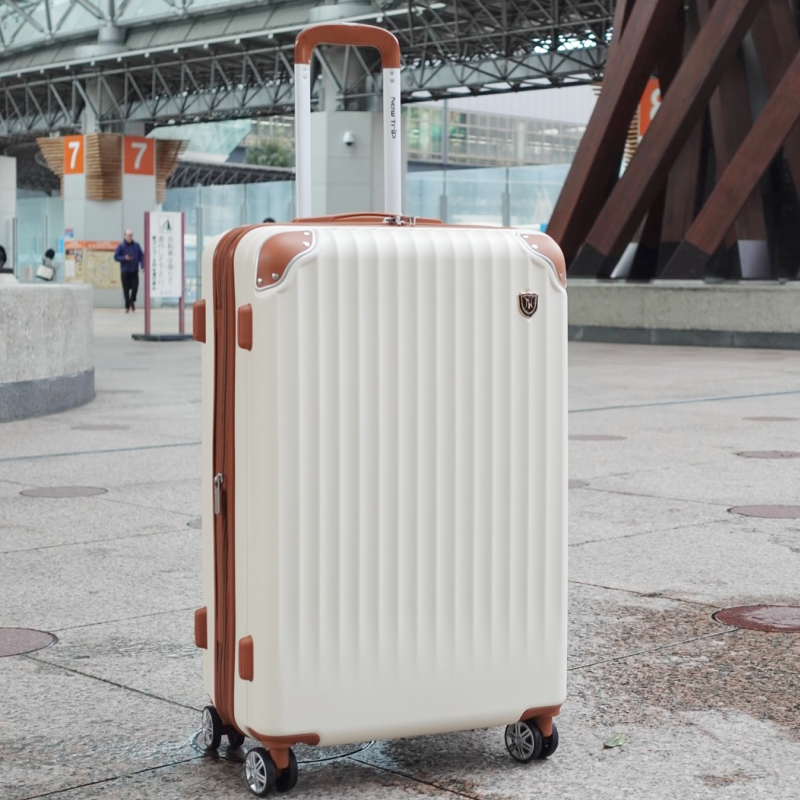
[New Trip] Suitcase Super Lightweight with Expansion Function 0201
👉 Check it out now

Title

IV. Helpful Checklist Before Traveling

Title

✅ Flight tickets, passport, and necessary documents: If you forget these, you can't travel at all.

✅ Check luggage weight: A portable scale allows you to measure at home. An essential item for LCC users.

✅ Packing liquids: Group them in a zip-top bag for easy removal.

✅ Check for suitcase damage: Confirm that the wheels and zippers are not broken.

✅ Attach covers and belts: This helps prevent damage and theft while checked.

Travel with more peace of mind and more style.
[New Trip] Adjustable Suitcase Belt
👉 Check it out now

Title

5. Summary

Title

Understanding the rules and preparing for baggage check-in at the airport is the first step towards a stress-free trip.


By knowing each airline's regulations and being aware of prohibited items and extra charges, you won't be flustered at the airport.

To make your trip even more comfortable, it's important to choose a suitcase with features such as "lightweight," "expandable," "durable," and "with stoppers."


New Trip Official Online Store offers a wide range of products, from carry-on models to large-capacity models for long trips.

Please check out our official website!

Title

FAQ (Frequently Asked Questions)

Title

Q1. Is it true that size regulations are different for planes with fewer than 100 seats?

Yes. Due to limited storage space on small aircraft, you may only be able to check in luggage that is under 15kg and within 45cm in length.

Title

Q2. What happens if my checked suitcase is damaged?

If you report it immediately upon receipt, you may be eligible for repair cost coverage or a replacement suitcase. Please note that delays may result in no compensation.

Title

Q3. How much will the additional charges be?

As a guide, anticipate paying around 1,000 to 3,000 yen for domestic flights and 5,000 to 15,000 yen for international flights. LCCs may charge a high fee for every additional kilogram over the limit.

Title

Q4. What are the import restrictions when returning to Japan from overseas?

There are quantity restrictions on alcohol, tobacco, and food. For example, whiskey is duty-free up to 3 bottles (760ml each); anything more than that is subject to tax. For cigarettes, the limit is 200 sticks.