



Complete Guide to Shinkansen Suitcase Carry-on Rules | Explaining the 160cm Regulation and Reservation Methods
Have you ever felt anxious, thinking, "I want to bring a suitcase on the Shinkansen, but I'm not sure about the rules," or "What if I get charged an extra fee at the station on the day?"
Since 2024, the "oversized baggage area seats" rule has been introduced on the Tokaido, Sanyo, Kyushu, and Nishi-Kyushu Shinkansen lines, and restrictions on the size of suitcases that can be brought on board have been strictly enforced. If you board without knowing the rules, you might incur unexpected fees or have trouble finding a place for your luggage.
This article will explain the precise rules for carrying suitcases on the Shinkansen, how to accurately measure them, and practical advice for comfortable travel.
What is the Shinkansen's "160cm Rule"? | Luggage that Requires Reservation, Luggage that Doesn't
First, it's important to note that Shinkansen rules vary depending on the JR jurisdiction.
| Shinkansen Line | Jurisdiction | Oversized Luggage Reservation |
|---|---|---|
| Tokaido, Sanyo, Kyushu, Nishi-Kyushu Shinkansen | JR Central, JR West, JR Kyushu | Reservation required (total dimensions 161cm or more) |
| Tohoku, Akita, Yamagata, Joetsu, Hokuriku Shinkansen | JR East | No reservation required (as of 2026) |
Your response will largely depend on which Shinkansen line you are using.
No Reservation Needed if "Under 160cm" — Accurate Measurement Method
The standard for "oversized baggage" set by JR Central, JR West, and JR Kyushu is when the sum of the three dimensions (length, width, and height) exceeds 160cm.
Important: This measurement includes all protrusions, such as casters, handles, pockets, and cup holders.
How to measure:
- Height: Measure from the tip of the handle to the bottom when the handle is fully extended.
- Width: Measure the widest part of the suitcase from left to right.
- Depth: Measure the deepest part from front to back (including any protruding pockets).
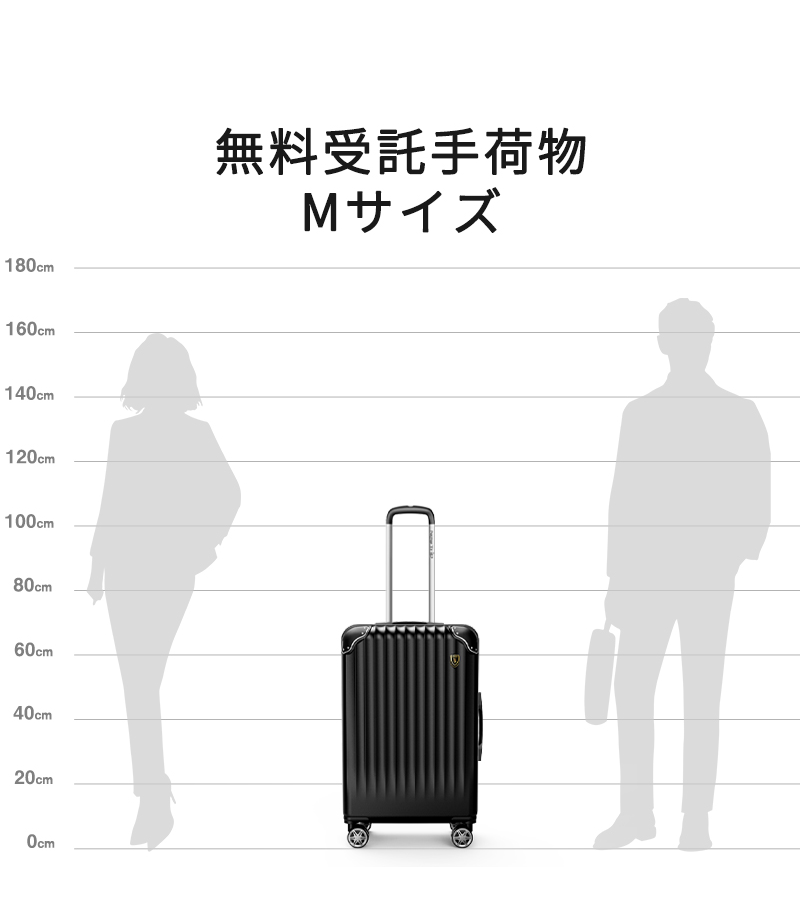
For example, a typical M-size suitcase (67cm height × 45cm width × 27cm depth) has a total of 139cm for its three dimensions, so no reservation is required.
Fees and Actions for "Over 160cm"
If you bring luggage with a total of three dimensions exceeding 160cm without a prior reservation, the following actions will be taken:
- Fee: 1,000 yen (tax included) will be collected on board.
- Luggage relocation: The luggage will be moved to the "oversized baggage area" at the very rear of the car.
- If the space is full: You may have to place your luggage in limited spaces, such as at your feet, which can significantly reduce comfort during travel.
This fee is not a "penalty" but rather a space usage fee, which can be avoided by making a reservation in advance.
How to Reserve (When Using JR Central, JR West, or JR Kyushu)
If you plan to bring luggage with a total of three dimensions exceeding 160cm, you can make a reservation in advance using the following methods:
- Smart EX / Express Reservation: Select "oversized baggage area seat" when reserving your seat online.
- JR Ticket Office: Make a reservation directly at a station ticket office.
- Phone Reservation: Call the JR Central, JR West, or JR Kyushu reservation center.
You will need to declare your luggage size when making a reservation. It is recommended to measure accurately before reserving.
The Reality of Luggage Storage on the Shinkansen | "Can be placed on the luggage rack" vs. "Can actually be placed"
According to the rules, suitcases with a total of three dimensions of 160cm or less can be placed on the overhead luggage rack (hat rack). However, there's a catch here.
Physical Limitations of Luggage Racks
While Shinkansen luggage racks may appear spacious, they actually have the following limitations:
- Width: Approximately 100cm (for one seat)
- Depth: Approximately 30cm
- Height: Approximately 20cm
- Weight capacity: Generally around 10kg
When an M-sized suitcase (approximately 60L) is packed full, the total weight often reaches 12kg to 15kg. Lifting this onto a narrow rack above your head can be dangerous, especially for women and seniors.
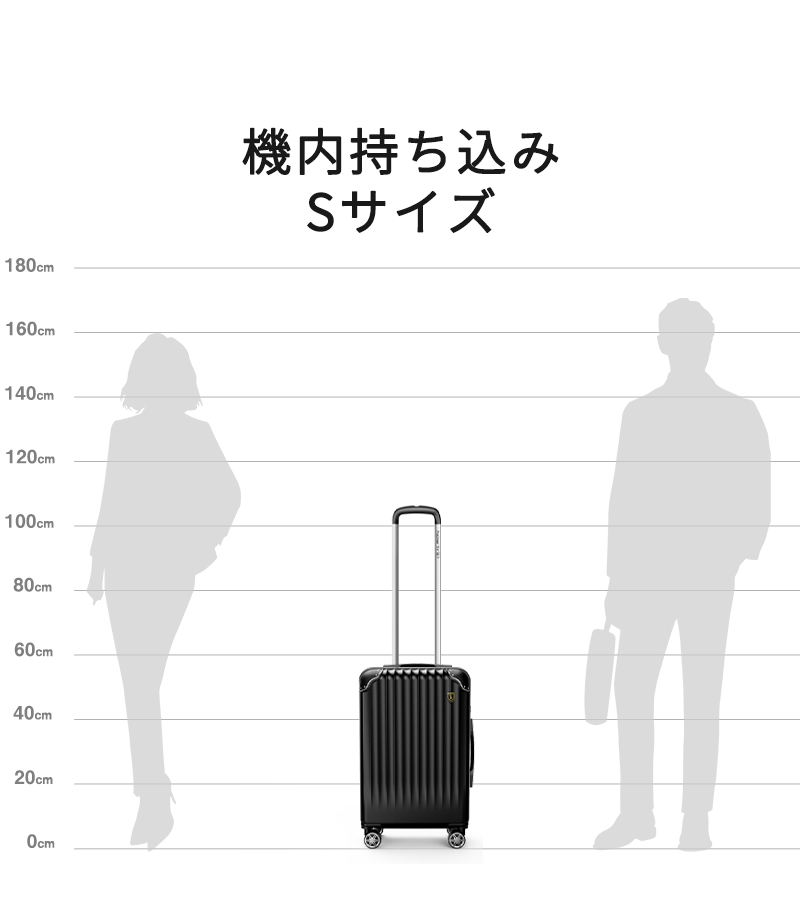
In reality, for comfortable Shinkansen travel, an S-size suitcase (total weight around 7kg to 10kg) that you can safely lift by yourself is a practical choice.
Non-reserved vs. Reserved Seats | Which should you choose?
When bringing a suitcase, seat selection is also important:
| Seat Type | Pros | Cons |
|---|---|---|
| Non-reserved seat | Lower fare | Trouble finding luggage space during crowded times. Foot space may be limited. |
| Reserved seat | Guaranteed seat. Relatively spacious foot room. | Higher fare. |
| Oversized baggage area seat | Can comfortably store large luggage. No extra charge (if reserved). | Advance reservation required. Limited seat locations. |
For an S-sized suitcase, you can place it at your feet even in a non-reserved seat. For M-sized or larger, we recommend using a reserved seat or an oversized baggage area seat.
The Problem of Suitcases Rolling on the Train | The Importance of Caster Stoppers
Have you ever experienced your suitcase rolling away on its own after boarding a Shinkansen or local train, especially when the train takes a sharp curve or brakes suddenly?
This is called a "rolling accident" and carries the following risks:
- Potential to injure other passengers by hitting their legs.
- Blocking aisles and obstructing passenger movement.
- You yourself tripping over the suitcase and falling.
The simplest way to solve this problem is to use a suitcase with caster stoppers (brake function).
How to Use Caster Stoppers
The stopper function is activated in one of the following ways:
- Hand button type: One click of a button on the side of the main body.
- Foot switch type: Pressing a switch with your foot.
Once you are seated, simply turn the stopper ON, and your suitcase will not move due to the train's motion. This allows you to effectively use your travel time for working on your PC, reading, napping, etc.
Measures When There is No Stopper
If you are using a suitcase without a stopper function, the following measures can be considered:
- Place it sideways: It will be less likely to roll, but there is a risk of the floor getting dirty.
- Secure it with your feet: You will need to exert force on your feet throughout the journey, leading to fatigue.
- Keep holding the handle: One hand will be occupied, greatly reducing comfort.
Since these measures do not provide a fundamental solution, it is worth considering replacing your suitcase with one that has a stopper function.
Avoiding Coin Locker Homelessness at Stations | What is the Optimal Suitcase Size?
On event days such as live concerts, regular concerts, or sports events, especially on weekends and public holidays, coin lockers in station premises are often full.
Coin Locker Installation by Size
Coin lockers installed at major stations in Japan typically have the following size composition:
| Locker Size | External Dimensions (Approximate) | Number of Units | Time Zone They Become Full |
|---|---|---|---|
| Small | Approx. 40cm H × 35cm W × 50cm D | Many | Morning |
| Medium | Approx. 55cm H × 35.5cm W × 57.5cm D | Most numerous | Afternoon to Evening |
| Large | Approx. 84cm H × 35.5cm W × 57.5cm D | Few | Full by morning |
Important point: On weekends and public holidays when events are held, large lockers are almost certainly full by morning.
"Medium Locker Compatible" is a Smart Choice
Even if large lockers are full, choosing a suitcase that fits into a medium locker, which usually has more availability, offers the following benefits:
- Can be deposited in a locker immediately upon arrival at the station.
- Prevents delays in joining merchandise queues.
- Increases the likelihood of making it to the start of the event on time.
The standard size for medium lockers is approximately "55cm H × 35.5cm W × 57.5cm D." Choosing a suitcase that fits this size can help reduce stress during your trip.
Practical Tips for Choosing a Suitcase
Optimal Size for Shinkansen Travel
For comfortable Shinkansen travel, we recommend the following size criteria:
| Size | 3-Side Total | Capacity | Shinkansen Comfort |
|---|---|---|---|
| S Size | ~115cm | 35~45L | ◎ Optimal. Easy to place on luggage rack, fits coin lockers. |
| M Size | 115~140cm | 50~65L | ○ Possible. However, can be difficult to lift onto luggage rack. |
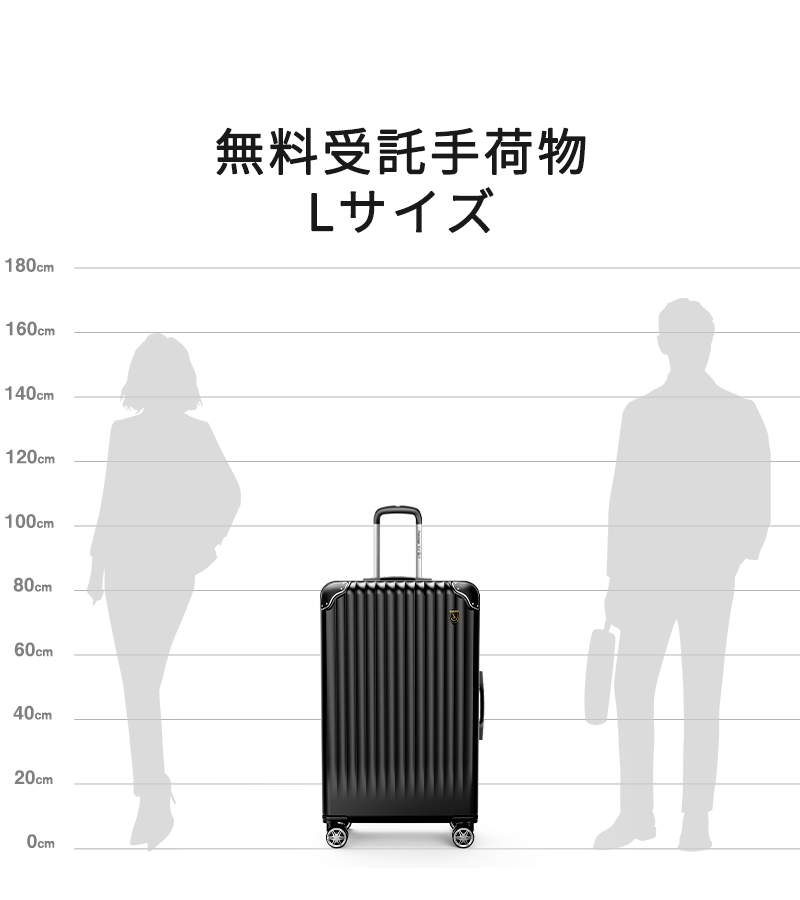
| L Size | Over 140cm | 70L or more | △ Advance reservation required. Often doesn't fit coin lockers. |
Pros and Cons of Front-Open Suitcases
Let's discuss the reality of the currently popular front-open suitcases.
Pros:
- Can easily access laptops, tickets, passports, etc. while the suitcase is upright.
- No need to place your luggage on the ground at station gates or security checks.
- High convenience during travel.
Cons:
- The partition in the front pocket may slightly reduce the capacity of the main compartment.
- With inexpensive products, the main body may tilt forward (known as the "bowing phenomenon") due to the weight of the front section.
- The durability of the zipper becomes important.
When choosing a front-open type, check the following points:
- Center of gravity design: Check if the main body tilts forward when items are placed in the front pocket.
- Zipper quality: Is a reliable manufacturer's zipper, such as YKK, used?
- Internal partitioning: Is it designed not to impede the main compartment?
How to Choose Casters
Casters (wheels) significantly affect the comfort of a suitcase.
Points to check:
- Double casters: A type with two wheels on one axle. Highly stable.
- Material: Urethane rubber is common. Balance between durability and quietness is important.
- Rotation: Try it out to see if it can change direction with light force.
- Stopper function: A brake function is convenient for safety on trains.
Basics of Material Selection
The main body material of suitcases primarily comes in the following three types:
| Material | Features | Durability | Price Range |
|---|---|---|---|
| Polycarbonate (PC) | Lightweight and highly impact-resistant. Material also used for bulletproof shields. | ◎ High | Medium to High |
| ABS Resin | Easy to process, wide variety of colors. However, weak against impact. | △ Medium | Low to Medium |
| Polypropylene (PP) | Lightweight and inexpensive. However, low durability. | △ Low | Low |
Considering Shinkansen travel, we recommend polycarbonate for its high durability.
Suitcase Lifespan and When to Replace
Nothing is more tragic than a suitcase suddenly breaking during a trip. If you notice any of the following signs, it's time to consider a replacement.
Signs for Replacement
- Abnormal noises from casters: "Gurgling" or "squeaking" sounds indicate worn-out internal bearings. Continuing to use it may cause the casters to lock up.
- Cracked caster rubber: Hydrolysis (deterioration over time) of the urethane rubber has begun. There's a risk of the rubber breaking off during travel.
- Wobbly carry handle: The internal lock pin of the handle may be deformed. In the worst case, the handle might come off.
- Zipper gets caught: This is due to zipper distortion or fabric stretching. There's a risk of the zipper tearing when the luggage is packed full.
- Cracks in the main body: Damage due to impact. Repairs are difficult, so it's time for a replacement.
The average lifespan of a typical suitcase is said to be about 3 to 5 years from purchase, depending on usage frequency.
If even one of the above signs applies, we recommend considering a replacement to prevent trouble during your trip.
Frequently Asked Questions (FAQ)
Yes, everything is included. The total of the three dimensions for "oversized baggage" as defined by JR is measured by the "outer dimensions (maximum dimensions)," including all protrusions such as casters, handles, pockets, and drink holders. Before purchasing, it is recommended to check the outer dimensions in the manufacturer's specifications.
By rule, a suitcase with a total of three dimensions of 160cm or less can be placed on the luggage rack. However, in practice, the weight capacity (generally about 10kg) and whether you can safely lift it yourself are important. For M-size or larger suitcases packed full, the total weight often exceeds 12kg to 15kg, making them difficult to lift. For safety, an S-size (total weight around 7kg to 10kg) that you can easily lift yourself is a practical choice.
The most reliable and easiest measure is to use a suitcase with a one-touch "caster stopper (brake function)." You can lock the movement of the casters by simply operating a button on the handle or a switch on the foot. If you are using a suitcase without a stopper function, you can physically prevent it from rolling by laying it sideways, but this may dirty the floor or easily obstruct other passengers. Therefore, it is worth considering replacing it with a model with a stopper.
Due to the presence of partition boards and cushioning in the front pocket, the pure spatial capacity of the main compartment may be slightly restricted. However, if the model has an expansion function (expandable), you can increase the storage capacity by simply opening the side expansion zipper to widen the gusset. Before purchasing, it is recommended to check the capacity in both standard and expanded states in the manufacturer's specifications.
Carry-on size standards vary by airline. Generally, a total of three dimensions within 115cm, and each side within 55cm height × 40cm width × 25cm depth, is a guideline. However, it may not be possible to carry on for small aircraft with less than 100 seats, or if the expansion zipper is open. Please check the regulations of your airline before boarding.
Summary of Suitcase Selection for Comfortable Shinkansen Travel
Here are the most important points for successfully bringing a suitcase on the Shinkansen:
- Check rules: Confirm the Shinkansen line's jurisdiction and whether the 160cm rule applies.
- Accurate measurement: Before purchasing, check the total of the three dimensions in the manufacturer's specifications. Measure the outer dimensions, including protrusions.
- Size selection: Considering Shinkansen comfort, an S-size (total of three dimensions 115cm or less) is optimal.
- Functionality check: Choose functions that meet your needs, such as caster stoppers, front opening, and expansion features.
- Material selection: For durability, polycarbonate is recommended.
- Regular maintenance: Address any abnormalities early, such as strange noises from casters or a wobbly handle.
By keeping these points in mind, your Shinkansen travel will be significantly more comfortable.
New Trip's Suitcase Options
For those looking for a suitcase suitable for Shinkansen travel, New Trip offers several options.
NewTrip 0501 S Size
Front Open EquippedFeatures a horizontally opening front compartment for easy access while standing. Equipped with functions that enhance convenience during travel, such as a USB port, back smartphone stand, and hook.
- Outer dimensions: Approx. 54 × 37.5 × 23cm (3-side total approx. 114.5cm)
- Capacity: Approx. 40L (49L when expanded)
- Weight: Approx. 3.43kg
- Main features: Front open, expansion function, USB port, caster stopper equipped
NewTrip 0502 S Size
High Durability SpecificationEquipped with ultra-quiet casters and robust corner protectors. Features high durability to withstand years of use.
- External dimensions: Approx. 54.5 × 37 × 23cm (Total of 3 sides approx. 114.5cm)
- Capacity: Approx. 40L (48L when expanded)
- Weight: Approx. 3.2kg
- Key features: Ultra-quiet casters, alloy corner guards, expansion function
NewTrip 0201Plus S Size
Multi-functional ModelEquipped with a foldable cup holder on the back. A highly practical model that allows you to keep both hands free while on the go.
- External dimensions: Approx. 55 × 36 × 23cm (Total of 3 sides 114cm)
- Capacity: Approx. 40L (49L when expanded)
- Weight: Approx. 3.3kg
- Key features: Drink holder, USB port, caster stopper, expansion function
Please note: All models listed above comply with the Shinkansen's 160cm rule (no reservation required), fit in medium-sized coin lockers, and are carry-on approved for airplanes. However, when the expansion zipper is open, these criteria may be exceeded. Please check each product page for details.
Finally
Bringing a suitcase on the Shinkansen is not difficult at all with prior preparation and accurate information.
By understanding the key points introduced in this article—the "160cm rule," "accurate measurement methods," "choosing the optimal size," and "the importance of caster stoppers"—you can free yourself from concerns such as:
- Worrying about unexpected fees at the ticket gate
- Anxiety about where to store luggage on the train
- Fear of your suitcase rolling around due to train movement
- The situation of destination coin lockers being full
Choosing a suitcase is not just about picking a "tool for carrying luggage" but a crucial decision for realizing a comfortable travel experience. By selecting a suitcase that meets your needs in terms of size and functionality, your Shinkansen journey will become much more pleasant.
We hope your future travels, business trips, and expeditions will be smarter and more comfortable.


Leave a comment
This site is protected by hCaptcha and the hCaptcha Privacy Policy and Terms of Service apply.