
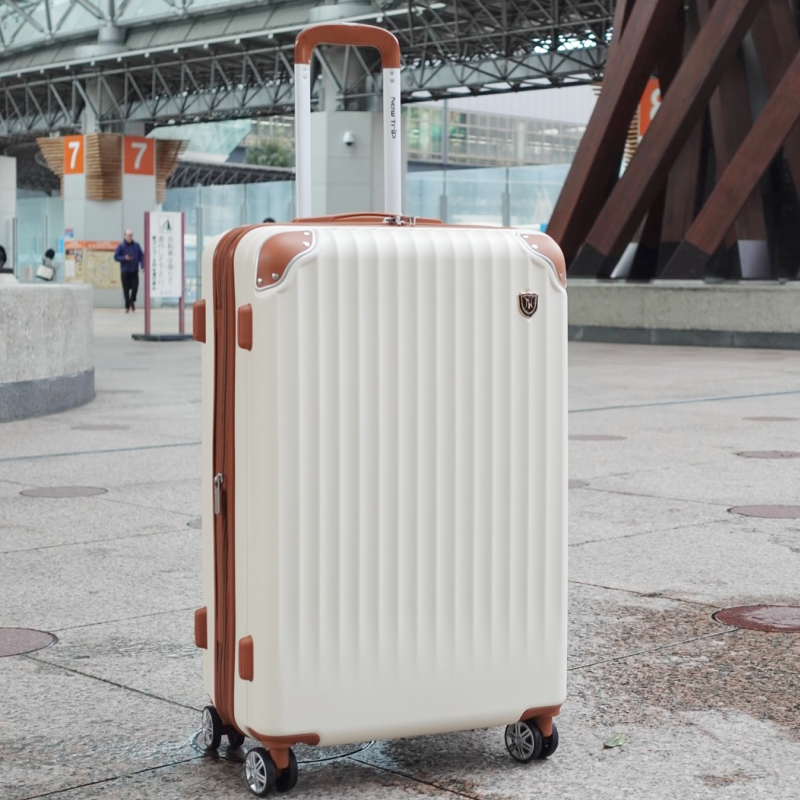


When choosing a suitcase, do you find yourself thinking, "The lighter, the better"?
Indeed, lightweight suitcases offer the significant advantage of reducing the burden of travel.
However, depending on your travel style, focusing solely on lightness can lead to regret. The optimal suitcase weight and features vary based on your travel purpose, such as domestic trips, long-term international travel, LCC use, or business trips.
This article, from the perspective of the New Trip editorial team, clearly explains whether a lightweight suitcase is truly necessary, who it's suitable for, and how to choose one without making a mistake by prioritizing lightness alone.
Should a suitcase be light?
In conclusion, lightweight suitcases are recommended for many travelers. However, it's not simply a case of "the lighter, the better."
It's important to choose a suitcase comprehensively, considering not just weight, but also material, casters, storage structure, and durability. Use the table below to check if a lightweight model is right for you.
| User Type | Compatibility with Lightweight Models |
|---|---|
| Frequent domestic traveler | ◎ |
| Frequent LCC user | ◎ |
| Women/Seniors | ◎ |
| Long-term international travel | ○ |
| Prioritizes sturdiness above all else | △ |
Lightweight models make travel easier, but choosing based solely on lightness can lead to regrets such as "insufficient capacity," "uncomfortable casters," or "durability concerns."
👉 Decision criteria: Lightweight models suit many people, but assess overall usability, not just weight.

Pros and Cons of Lightweight Suitcases
Lightweight suitcases offer the advantage of reducing the burden during travel. On the other hand, choosing incorrectly can lead to dissatisfaction with functionality or durability.
Pros of Lightweight Suitcases
1. Easy to lift
There are surprisingly many situations during travel when you need to lift your suitcase: at the airport check-in counter, on train station stairs, onto Shinkansen luggage racks, or over hotel steps. A lighter body reduces the burden each time.
2. Can pack more luggage
When LCCs or airlines have weight restrictions, a lighter suitcase body allows more room for packing clothes and other items. This is a significant advantage, especially with carry-on limits of 7kg or checked baggage limits of around 20kg.
3. Less tiring for long journeys
For trips with many transfers or long walks within airports, the ease of handling a lightweight model becomes particularly noticeable. This is a big advantage for those who travel frequently, such as for business trips or domestic travel.
Cons of Lightweight Suitcases
1. Durability concerns with ultra-light models
Not all lightweight suitcases are fragile. However, some inexpensive, ultra-light models achieve their lightness by using thinner materials. It's crucial to assess the balance between lightness and durability.
2. Prioritizing lightness alone can mean compromising on features
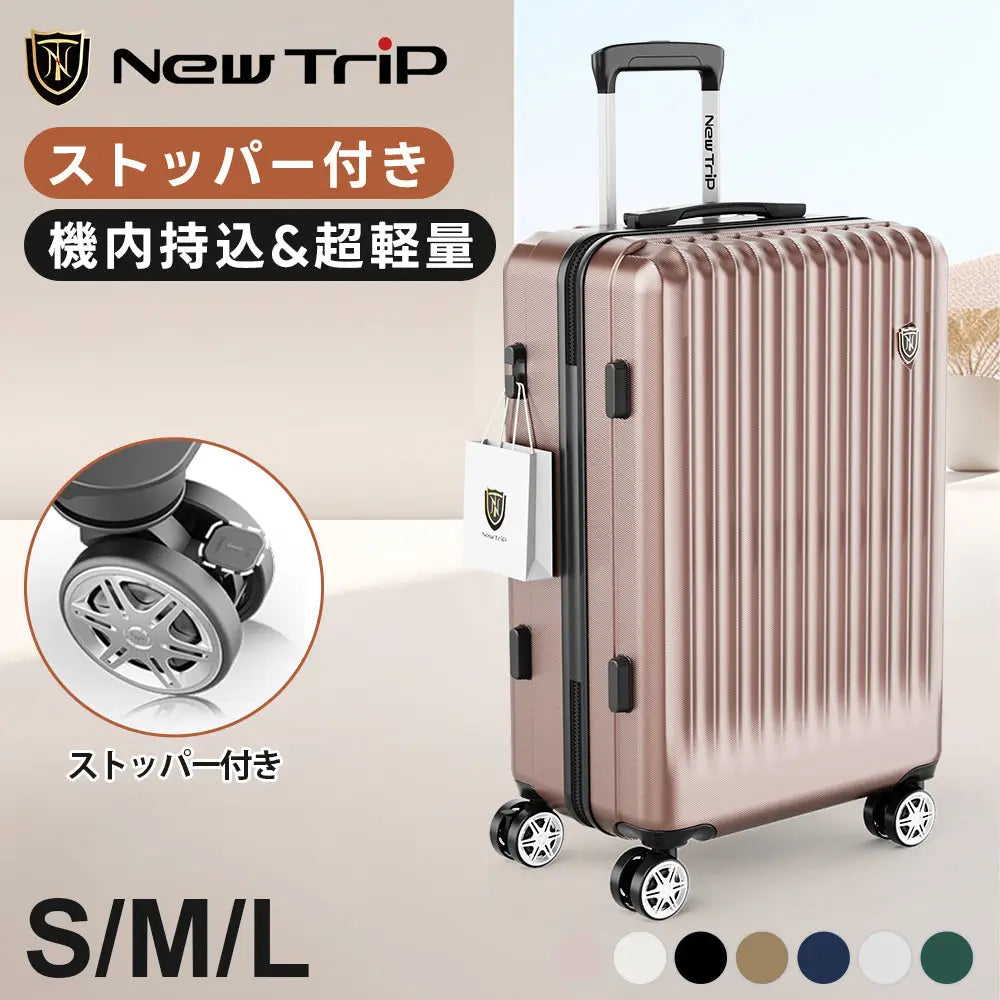
When lightness is prioritized, features such as expansion capabilities, front-opening access, stopper-equipped casters, or interior pockets may be omitted. In actual travel, storage and maneuverability can sometimes affect comfort more than weight.
When choosing a lightweight suitcase, think not just "it's light, so it's good," but "is it light and easy to use?"

5 Points to Check Beyond Lightness
The ease of use of a suitcase isn't solely determined by its weight. When choosing a lightweight model, it's crucial to check the material, capacity, casters, storage, and even the warranty.
① Focus on the material
When choosing a lightweight suitcase, the first thing to look at is the material. The material significantly affects not only lightness but also impact resistance, appearance, and price range.
Generally, hard-shell suitcases often use polycarbonate (PC) or ABS resin, or a PC+ABS composite. Soft-sided suitcases may use nylon or polyester.
| Material | Characteristics | Suitable Uses |
|---|---|---|
| Polycarbonate (PC) | Lightweight yet highly impact-resistant, with a premium look | International travel, business trips, long-term use |
| ABS Resin | Good cost performance, lightweight, easy for everyday use | Domestic travel, short trips |
| PC+ABS Composite | Offers a good balance of lightness, durability, and price | Wide range of travel styles |
| Nylon/Polyester | Flexible and lightweight. Many models with outer pockets | Short trips, frequent packing/unpacking |
If you travel internationally or for business frequently, polycarbonate, which balances lightness and impact resistance, is recommended. On the other hand, for occasional domestic or short trips, ABS resin or PC+ABS materials can also be quite convenient.
👉 Decision criteria: Choose a material that suits your travel frequency and environment, not just for its lightness.
② Check the size and capacity
Even if a suitcase is lightweight, insufficient capacity can be inconvenient during a trip. Conversely, choosing too large a size can make even a lightweight model difficult to handle.
It's crucial to check not just "how light" a suitcase is, but "does the capacity match my trip duration?"
| Approx. Size | Approx. Trip Duration | Points to Check |
|---|---|---|
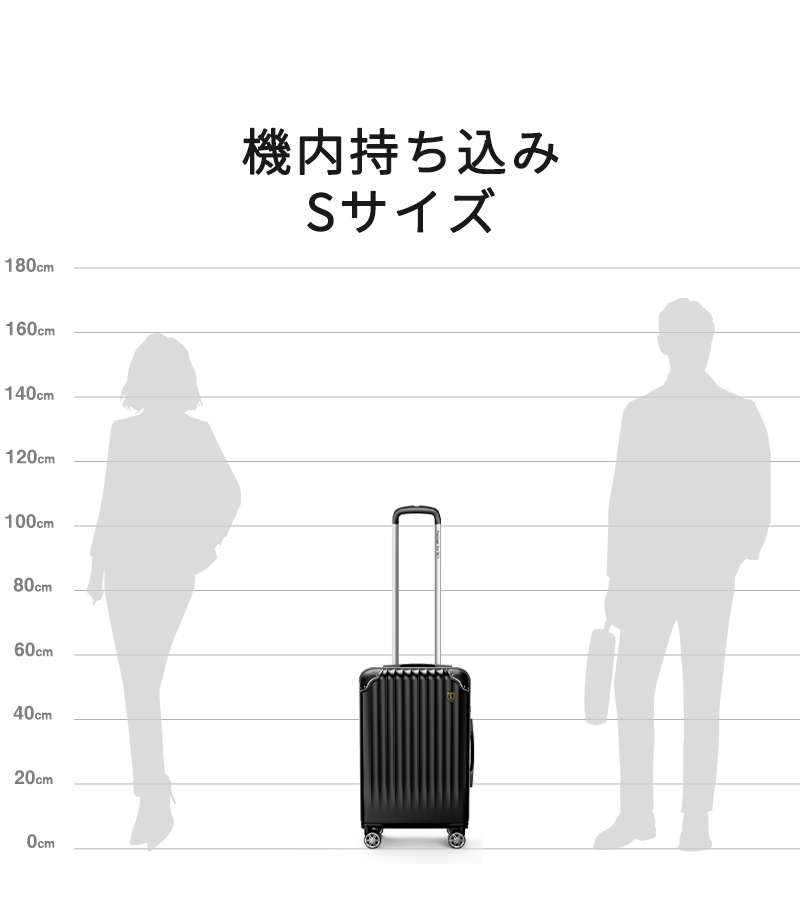
| Approx. 20 inches | 1-2 nights | Is it carry-on compliant? Does it meet LCC regulations? |
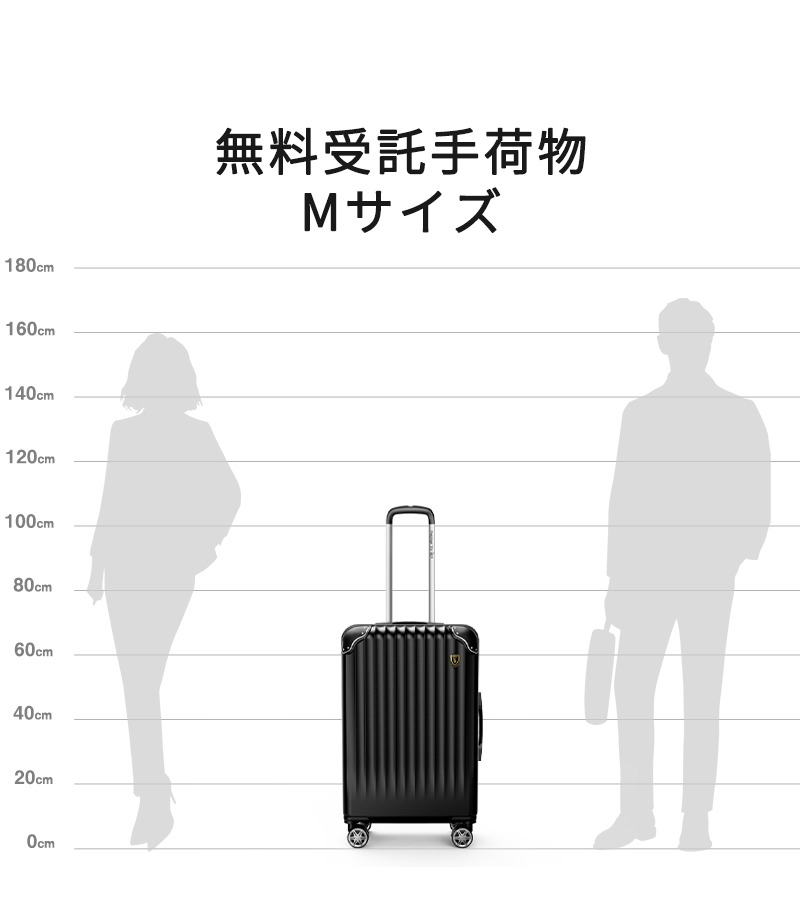
| Approx. 24-26 inches | 3-5 nights | Balance of capacity and portability |
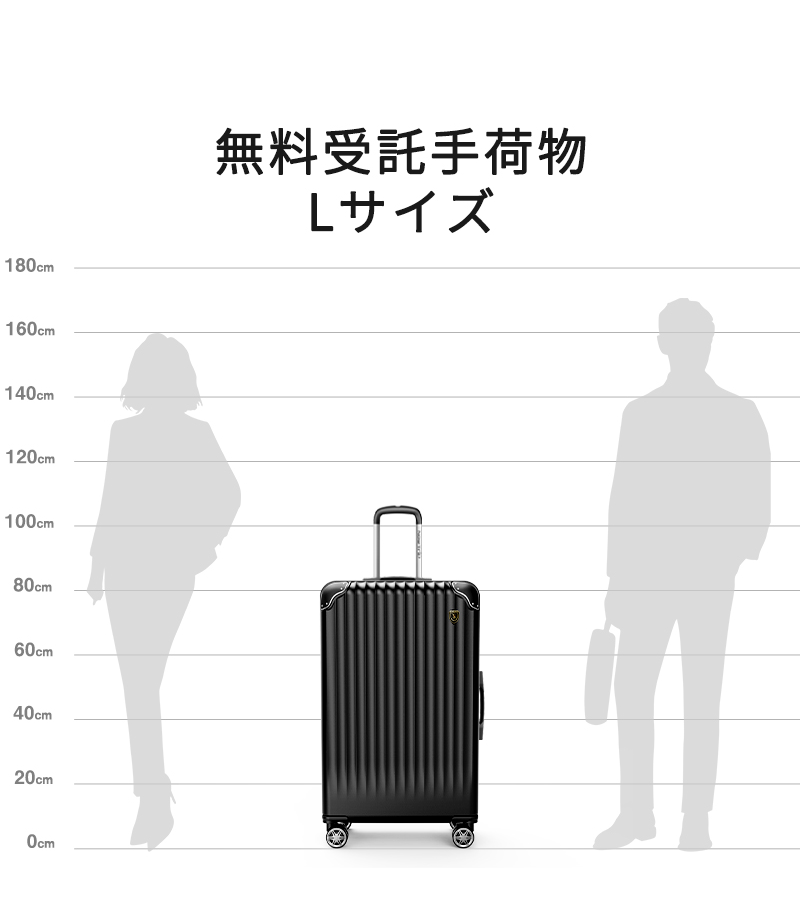
| Approx. 28 inches or more | 1 week or more | Be mindful of checked baggage size/weight limits |
Also, when choosing a lightweight suitcase, check the internal dividers and expansion features. Even with the same stated capacity, the ease of packing can vary due to internal structure.
If you're concerned about souvenirs or an increase in luggage on the return trip, choosing a model with an expansion feature will provide peace of mind.
👉 Decision criteria: Even if it's lightweight, a lack of capacity will be inconvenient. Choose a size that matches your trip duration and luggage volume.
③ Check the smoothness of the casters
Even with a lightweight suitcase, poor caster movement will not make travel comfortable. In reality, the "ease of pushing" can often have a greater impact on user experience than the actual weight of the suitcase.
When examining casters, check the following points:
- Do the casters rotate 360 degrees?
- Are the casters quiet?
- Is it a 2-wheel or 4-wheel type?
- Do double casters provide stability?
- Does it have a stopper function?
2-wheel types are easier to pull over steps and uneven surfaces, but require a bit more effort for turning. 4-wheel types offer better maneuverability and are comfortable for moving on flat surfaces like airports, hotels, and train stations.
Especially for those who frequently navigate crowded areas, ticket gates, or narrow passages, a 4-wheel type with 360-degree rotation is recommended. Furthermore, quiet casters allow you to be considerate of others during early morning or late-night travel.
👉 Decision criteria: Check the smoothness, quietness, and stability of the casters, not just the body weight.

④ Check storage structure and functionality
While being lightweight, modern suitcases have also made significant advancements in storage and functionality. Compromising on storage features by prioritizing lightness can make travel less convenient.
For the internal structure, check for divider panels, mesh pockets, and securing straps. These help organize clothes, small items, chargers, toiletries, and more.
Also, depending on your travel style, the following features can be convenient:
- Front-opening: Convenient for business trips or travel when you need quick access to a laptop, documents, or small items.
- Expansion function: Easy to accommodate increased luggage or souvenirs on the return trip.
- TSA Lock: Provides peace of mind when checking luggage for international travel.
- Stopper function: Helps prevent the suitcase from moving on trains or inclines.
- Drink holder: Allows you to temporarily place a drink while on the move.
However, more features aren't always better. If you have many unused features, the weight and price may increase accordingly.
👉 Decision criteria: Check if the features are truly useful for your travel scenarios.

⑤ Check warranty and durability
To use a lightweight suitcase for a long time, checking its durability and warranty is essential. The casters, zippers, handles, and locks are particularly high-use parts that endure significant stress.
Before purchasing, check the following points:
- What is the warranty period?
- Are repairs for casters or handles covered?
- Are there reviews regarding the durability of zippers and locks?
- Is the customer support contact clear?
- Is there a replacement policy for initial defects?
Lightweight models achieve their lightness through clever material and structural design. Therefore, it's reassuring to check not only the appearance and price but also how the brand manages quality control.
👉 Decision criteria: Just as important as lightness is whether it can be used safely and for a long time.

Lightweight Suitcases Recommended for These People
Lightweight suitcases are particularly suitable for those who travel frequently or find lifting luggage burdensome.
Those who travel domestically or on business frequently
For those who frequently travel by Shinkansen or train, there are many situations where a suitcase needs to be handled, such as on station stairs, at ticket gates, or lifting it onto luggage racks. A lightweight model reduces stress even during short trips.
Those who frequently use LCCs
LCCs often have strict weight limits for carry-on baggage. Choosing a lightweight suitcase body allows more room for clothes and small items.
Women and Seniors
The weight of a suitcase directly impacts fatigue during travel. Especially in places with many stairs or uneven surfaces, a lighter body makes it easier to handle.
Those who often need to lift luggage
Lightweight models are recommended for those who frequently need to lift their suitcases, such as in hotels without elevators, stations with many stairs, or onto train overhead racks. Reducing small burdens during travel makes the entire journey more comfortable.
👉 Decision criteria: If you travel for long durations or frequently use public transportation, a lightweight model is worth prioritizing.

3 Recommended Lightweight Suitcases
Here, the New Trip editorial team introduces three lightweight suitcases recommended by purpose. We focused not only on lightness but also on balancing ease of use and functionality.
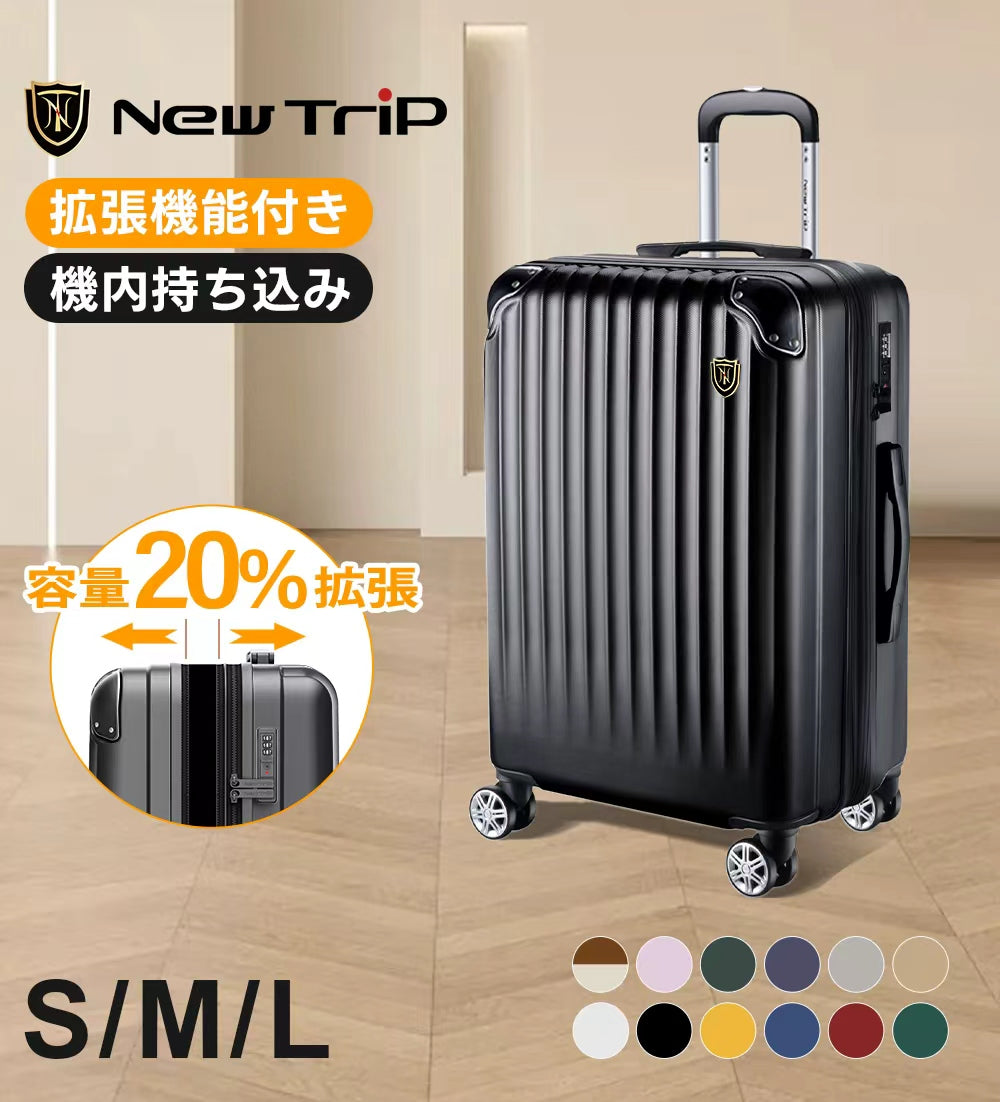
If lightness is your priority | New Trip 0201
This model features a lightweight design of approximately 2.8kg for the S size, plus an expansion function to increase capacity. It can flexibly accommodate an increase in luggage like souvenirs, making it versatile for both domestic and international travel. Recommended for those who want "the lightest possible suitcase."
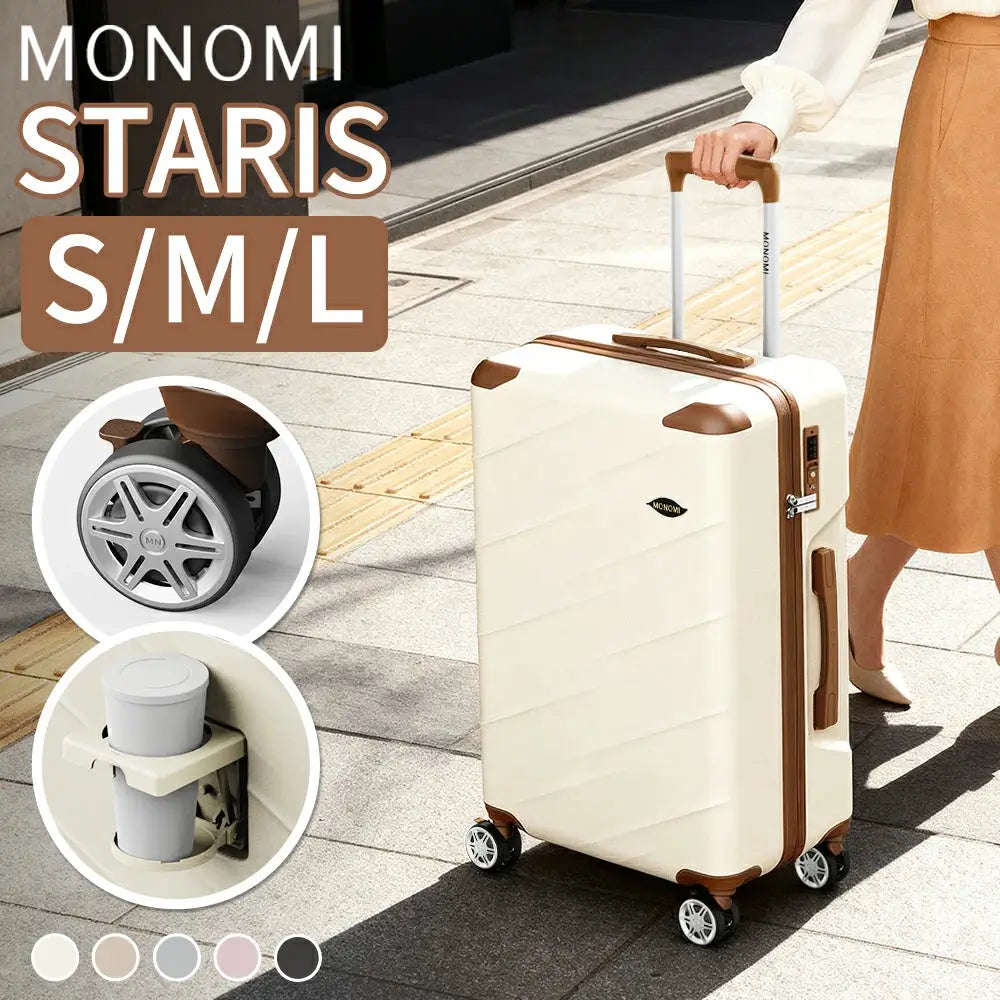
For balance with functionality | MONOMI 0802
Maintaining a light weight of approximately 2.9kg for the S size, this model incorporates convenient features such as stopper-equipped casters and a drink holder. It's a perfect choice for those who prioritize comfort during travel and usability during their trip.
If you often use public transport | New Trip 0701 Plus
This model features a lightweight body of approximately 2.9kg for the S size and is equipped with caster stoppers. It helps prevent the suitcase from moving unexpectedly on trains or inclines, reducing stress during travel. Recommended for those who frequently use public transportation like Shinkansen, trains, or buses.