Mastering Suitcase Wheels: How to Choose and Easily Care for Them

  • New Trip

Updated: 2025.03.13

Title

I love to travel, but I only realized the importance of suitcase wheels a few years ago when the wheels on my suitcase suddenly started rattling at an overseas airport, and eventually stopped working altogether.


It was incredibly difficult to walk through the terminal with heavy luggage, and that's when I truly felt, "The wheels are the heart of a suitcase!" Since then, I've become very particular about wheels.


This time, I'll share the tips for choosing and caring for wheels that I learned from that experience, along with specific models. If you've ever had trouble with suitcase wheels, please read on!

Table of Contents

  • Types of Suitcase Wheels

  • Thinking with Concrete Models

  • Tips for Choosing

  • Introducing My Caster Care Techniques

  • Finally

  • FAQ

1. Types of Suitcase Casters

When it comes to suitcase wheels, there are so many options that it can be hard to choose, right? I was also confused at first, wondering "Which one is best?" So, let's organize this from two perspectives.

① The total number of wheels on the suitcase (2-wheel, 4-wheel, or more)

② The number of wheels per caster (single or double)

This should help you find the type that suits you best.

Considering the Number of Wheels: 2-Wheel, 4-Wheel, or More

  • 2-Wheel: This type is tilted and pulled. It's good for heavy luggage or rough surfaces like cobblestones, but pulling it for a long time can tire your arm.


  • 4-Wheel: With 360-degree rotation, you can glide smoothly across wide airport floors. However, it can be bumpy on cobblestones. I imagine the quietness would be a great help during early morning travel. Just be careful on rough roads.


  • More (6-Wheel, 8-Wheel): A common trend seen in luxury models. More wheels distribute the weight, increasing stability. However, maintenance seems like a hassle, and it might be overkill for everyday use. I'd love to try it on a lavish trip.

Considering the Number of Wheels: Single vs. Double Casters

  • Single Casters: One wheel per caster. Simple and lightweight, but prone to strain with heavy loads. The single caster type I used in the past was smooth for light travel, but its movement became sluggish with more luggage.


  • Double Casters: Two wheels per caster. Provides increased stability and durability, and is reliable even on uneven surfaces. Double casters with cushioning can absorb shocks, and the appeal is that they don't rattle on cobblestone streets.
Title

2. Consider a Specific Model

Smooth Mobility with Silent Casters: New Trip 1302

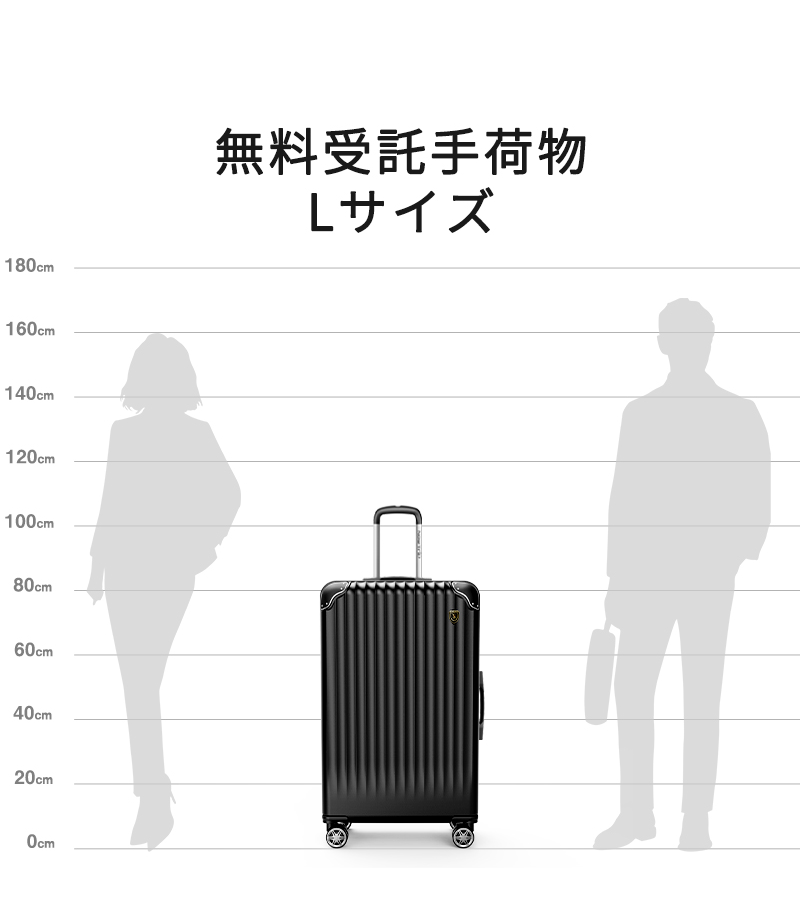
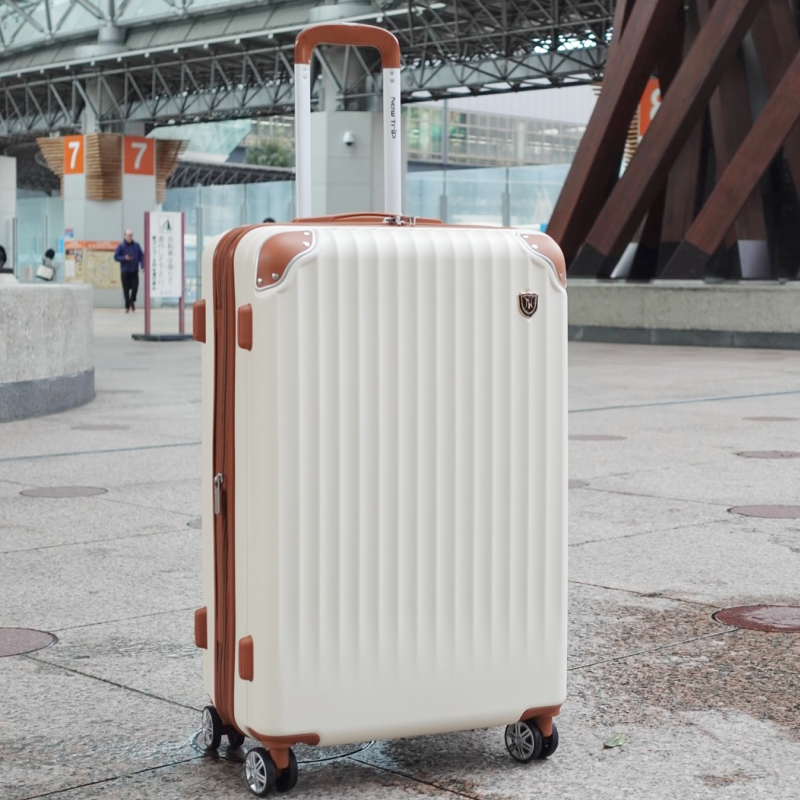
This "New Trip 1302" features silent casters made by SJ.TOBOL of the USA, which allow for smooth 360-degree rotation. According to the website, they "significantly reduce caster noise." I can imagine that if I used this in a quiet airport early in the morning, I could move around without worrying about disturbing others, making it stress-free. The luxurious aluminum design is particularly appealing, making me think, "I could use this for a long time!" It also seems like it would be stable on cobbled streets.


Check Now

Peace of mind with stoppers:
New Trip 0201Plus

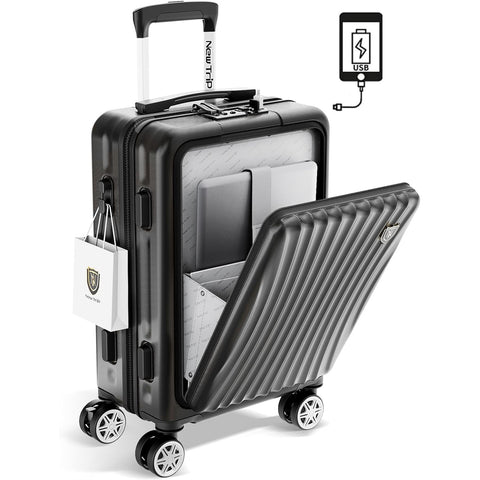
Next up is the "New Trip 0201Plus." This model has a locking function on its casters, which prevents the suitcase from moving on its own on trains or inclines. I once had a terrifying experience on a train when my suitcase rolled away, so this stopper is truly a lifesaver! Plus, with its expansion feature, the capacity increases by 20%, so there's no need to worry even if you buy more souvenirs. The USB port is also a big plus, allowing you to charge devices while on the go.


Check it out now

Shock-resistant with cushioning: New Trip 1101

Finally, the "New Trip 1101" features double casters with shock-absorbing suspension, which absorbs impact even on uneven roads. It can reduce traditional noise by approximately 30%, and the cushioning also enhances quietness. If I had used this on the cobblestone streets of Europe, I imagine I could have walked comfortably without rattling. The durable aluminum frame is also reassuring.


Check Now

Title

3.Tips for Choosing

When choosing casters, what I value most is "the actual feel."

It's good to check specs online, but if you're buying a suitcase next, please try spinning the casters in-store for 10 seconds. You'll immediately understand the smoothness, sound, and stability.

For example, the quietness of the "New Trip 1302" and the ease of use of the stopper on the "New Trip 0201Plus" should be immediately noticeable when you touch them.

See if it suits your travel style there!

Title

IV.Introducing My Caster Care Techniques

The casters are like the feet of your suitcase. If they don't move, your suitcase will be in trouble, right? That's why maintaining, repairing, and replacing casters is actually super important.

  • Just a quick wipe of the casters with a damp cloth. Removing sand and dust after a trip makes a huge difference in how smoothly they move. Casters with cushions, in particular, tend to accumulate fine dirt, so I always clean them carefully. This often saves me from needing to replace them.
  • Toothbrush cleaning
    Brush out sand from the gaps with a toothbrush. This restores the quietness of your suitcase. I considered repairs, but this simple step solved the problem. It's easy and incredibly effective.
  • Inspection
    Rotate the casters and check for any unusual noises or wobbling. Also, check if the stopper works properly. If something seems off, you might want to try a little lubricant before sending it for repair (check the manufacturer's recommendations). This can prevent problems from occurring in the first place.

If you want your casters to last longer, consider purchasing "caster covers."

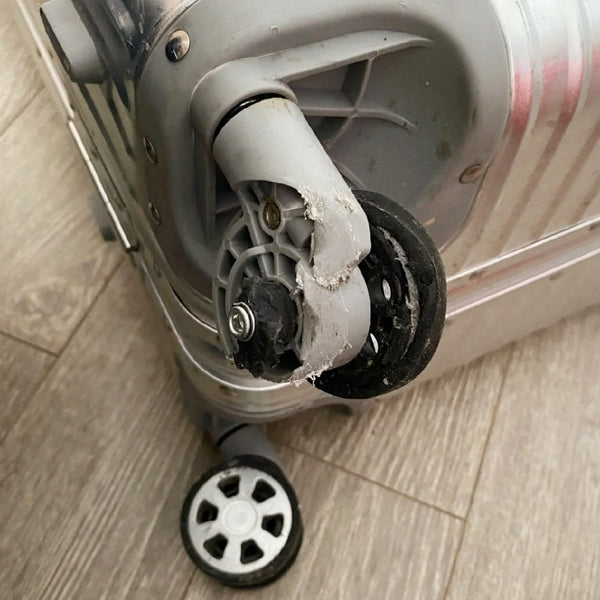
If your casters are cracked, or if the rubber on the tires is chipped or has come off, we recommend using the manufacturer's after-sales service or a specialized store for repair or replacement, or buying new casters and repairing them yourself.


<Related Articles>

"Suitcase Caster Failure?! How to Deal with and Prevent Spring Pop-Outs"

Title

V. Finally

Although casters are small parts, they are important for determining the comfort of your trip.


Whether quietness is important, you want stability, or you prefer something resistant to impact, choose according to your travel style.


Why not pay a little attention to casters to make your next trip even more enjoyable?

Title

FAQs

1. How durable are suitcase wheels?

The durability of casters depends on their material and usage, but with normal use, they typically last several years.

Those made of hard plastic or rubber are suitable for light travel and often pose no problem for hundreds of kilometers of movement.

However, frequently carrying heavy loads or traversing uneven surfaces like cobblestones can cause them to wear out quickly. Double casters and high-quality ones tend to offer greater durability.

2.Two-Wheeled or Four-Wheeled: Which is More Convenient?

Two wheels are strong against heavy loads and rough terrain, and if you're used to pulling them, they offer stability. However, your arm might get tired after a long time.

Four wheels can move 360 degrees, making them easy to maneuver smoothly on flat surfaces like airports. However, they can be a bit unstable on cobblestones or inclines.

I'd say if you do a lot of city walking, four wheels are better, but if luggage is your priority, two wheels are the way to go.

3. Can I fix the casters myself if they break?

If it's just a small debris jam, cleaning it with a toothbrush or using a little lubricant might fix it. However, if it's cracked or broken off, it might be difficult to fix it yourself.

It's safest to contact the manufacturer's after-sales service to request repairs or replacement parts. Be careful not to force a fix, as there's a risk of damaging other parts!

4.The casters are noisy. What should I do?

Even with silent casters, noise can become noticeable if sand or dirt accumulates. First, try wiping them with a damp cloth and cleaning out any debris. If they're still noisy, the casters themselves may be worn out.

Some manufacturers offer silent replacement parts, so it might be worth inquiring with them.

5. How do I care for a suitcase with casters?

After a trip, the basic rule is to wipe away dirt with a damp cloth.

Fine sand can be gently removed with a toothbrush, which is a good idea. It's also important to occasionally rotate the wheels to check for unusual noises or wobbling.

If you want them to last longer, storing them in a cover when not in use will prevent dust from accumulating on the casters.

New Life Campaign Underway!!!

Title

Check it out now

By
ニュース
By Trip New
ニュース
Nov 27, 2023

Traveling allows you to see scenery, historical sites, and experience the extraordinary environment of your destination.

When traveling to many different places, you may need to check your luggage on an airplane, but one of the concerns after your trip is bacteria and dirt.

Today I'll show you how to clean your suitcase and travel gear.

  • The difference between cleaning and disinfecting: "How to do both"
  • How to clean the inside of a suitcase
  • How to clean the exterior of your suitcase
  • How to clean a fabric-covered suitcase

So let's get started!

Open the suitcase

When you return from your trip and unpack, we recommend leaving your suitcase in the garage or entryway. Open your suitcase, put your clothes in the washing machine, and wipe down any toiletries, cosmetics, and electrical appliances like hair irons with disinfectant wipes.

Start opening your suitcase. Organizing your suitcase may mean shoving everything from your suitcase into a corner, but it's important to make sure your home is clean.

Speaking of clothes, you can throw all your dirty clothes in the washing machine. For shoes, toiletries, electronics, and other hard objects, you can wipe them down with disinfectant wipes. It's that easy! Now the real cleaning begins.

The difference between cleaning and disinfecting

There is a difference between cleaning and disinfecting.

According to the Centers for Disease Control and Prevention, cleaning "removes recent, dirt, and debris from surfaces, but does not kill bacteria," while disinfecting refers to the use of chemicals "to kill bacteria on surfaces."

Without cleaning and disinfection, dirt and potential lingering bacteria from infection sources remain.

Let's start from the inside!

Cleaning the inside of your suitcase

We will check the interior pockets of your suitcase and clean the inside.

Remove any debris from the suitcase. There will be debris inside, so use a vacuum cleaner or similar to clean it.

There may be dirt inside the suitcase that cannot be removed by vacuuming alone, so after vacuuming, disinfect it with a wet towel and disinfectant wipes.

Stubborn stains can be removed using a special stain remover.

Use as a travel organizer bag

So far we have introduced how to clean the inside of your suitcase, but you can save time by using a travel organizer bag. By using a travel organizer bag, you can wash the entire bag and keep it clean.

When packing your belongings, adding a moisture absorber inside will also help prevent odors.

New Trip travel organizer bag

How to clean a suitcase that smells bad

If your suitcase smells bad, it could be due to the following reasons:

・The suitcase is stored in a humid place such as a basement or warehouse. ・The contents of the suitcase are not organized, and damp items such as used swimsuits or towels are still inside.

Try the following methods

Ventilate your suitcase after long-term storage by opening it and letting it dry in the sun.

Use baking soda - Sprinkle baking soda inside your suitcase to remove the moldy smell. After sprinkling the baking soda, close the suitcase and wait until the smell dissipates. Finally, vacuum it up.

- Using cat litter --- This method is time-consuming but very effective.

Pack cat litter into a suitcase and leave it there for a few days.

White vinegar and water spray --- Mix white vinegar and water in a 1:3 ratio and pour into a spray bottle.

Sprinkle it on your suitcase and let it air dry.

Putting a desiccant in your suitcase before you go out will help prevent unpleasant odors from building up inside the suitcase.

How to keep the outside of your suitcase clean

The cleaning method varies depending on the type of suitcase exterior.

hard shell suitcase

The exterior of a hardshell suitcase is waterproof, durable and abrasion resistant.

Therefore, cleaning a hard-shell suitcase is slightly different from cleaning a soft-shell suitcase.

Gently wipe with a damp cloth and mild detergent, then thoroughly brush and rinse to disinfect.

Disinfecting wipes are convenient for disinfection.

Damaged suitcase

It's very normal for your suitcase to have at least one scratch, even when you're at home. It's unfortunate that even after proper cleaning, some scratches remain on your suitcase, but that's normal. That's OK! This is why we created New Trip's cushioned cover, which keeps your hardshell suitcase looking like new.

How to clean a fabric suitcase

To clean the outside of a fabric suitcase, you will need:

·sponge

・Foam-type public spray (carpet cleaner, sofa cleaner, etc.)

・Towels (dishcloths, etc.)

Spray the foam spray all over the suitcase and then use a sponge to focus on areas with stubborn stains. (If the fabric is water-repellent, rubbing too hard may remove the treatment.) Leave it for the amount of time recommended by the cleaner, then wipe off the foam with a towel. This procedure will remove stubborn stains.

Image link: https://newtrip.online/collections

Detail cleaning

Cleaning your suitcase doesn't just involve the frame and contents, it's important to also clean the small details.

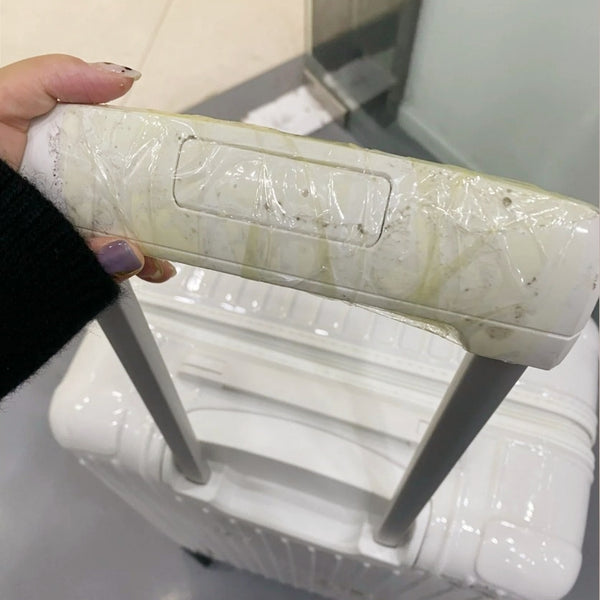
・Handle---Wipe clean with disinfectant wipes or a wet towel.

- Wheels --- If dirt accumulates on the wheels, they will become less slippery. Remove dust and other particles with a small brush and wipe them with a wet towel or disinfectant wipes.

Drying the suitcase

It's easy to forget to take care of your suitcase, but if you leave it in a humid place or put wet items in it and then leave it there, mold will easily grow and cause it to become smelly and dirty.

Place it in a well-ventilated area and take measures such as putting a desiccant inside.

Cleaning completed!

Now that your suitcase is clean, it's important to take care of it after use so that it will be comfortable to use the next time.

Make your trip more comfortable

Traveling requires a lot of preparation, but unpacking and taking care of your luggage are also essential for a comfortable trip.

The durability of the suitcase is also essential for a comfortable trip.

If it breaks while you're traveling, it will ruin your trip.

That's why New Trip focuses on creating suitcases that are both durable and beautiful.

New Trip suitcases are hard-shelled, scratch-resistant, durable, and stylish. Enhance your travel style with New Trip suitcases that also offer practical features for a comfortable trip.


By Trip New
ニュース
Oct 23, 2023

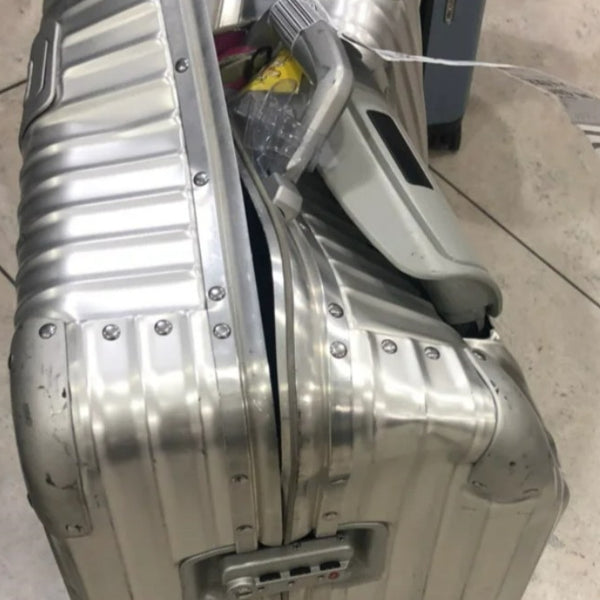
Suitcases are essential for travel, but they can break if they are handled roughly on airplanes or trains, or if they are loaded with too much luggage. Damage to the zipper, frame, or handle can make it difficult to close the suitcase, which can be extremely frustrating. What should you do in such a situation?

If your suitcase breaks, the first thing to do is to stay calm and assess the situation. The solution will vary depending on the part of the suitcase. The most common problem is when the zipper or lock on the suitcase is broken and it won't close. There are two types of suitcases: those that fasten with a zipper and those that don't (so-called frame types).

A common problem with suitcases with zippers is that the zipper breaks and the suitcase won't close. Aside from damage caused by being checked in as luggage on an airplane and being handled roughly, the most common cause of damage is probably a broken zipper on a suitcase.

Another common type of damage to suitcases is when the lock that closes the suitcase breaks and the suitcase cannot be closed, rather than a zippered one. The lock can break when the suitcase is hit while it is being checked in.

First, check the cause of the damage to your suitcase. If the damage occurs when you check it in at the airport, the airline will cover the cost of repairing the suitcase or replacing it with a new one. Therefore, if you notice any damage when you receive your suitcase, immediately take a photo and report it at the counter. It is important to secure your suitcase with a suitcase strap or tape. This will prevent your luggage from spilling out.

If the damage was your fault, you have the option of repairing it or buying a new suitcase. If you choose to repair it, you can do the following:

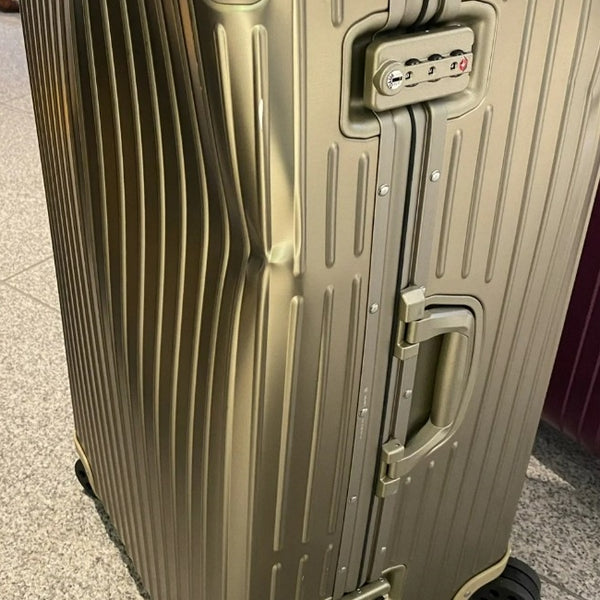
If the frame is distorted
- If the frame is slightly warped, you can fix it by hitting it from the direction of the warp with a rubber hammer.³ Be sure to hit the metal part, as hitting the plastic part will cause it to crack. You can buy a rubber hammer at a 100 yen shop.

- If the frame is severely warped, it is difficult to repair. In this case, we recommend purchasing a new frame or a new suitcase. However, if the frame becomes warped while traveling, it is important to secure the suitcase straps with suitcase straps or tape. This will prevent your luggage from spilling out. Decide whether to take it to a repair shop during your trip or after you return home, or whether to purchase a new suitcase.

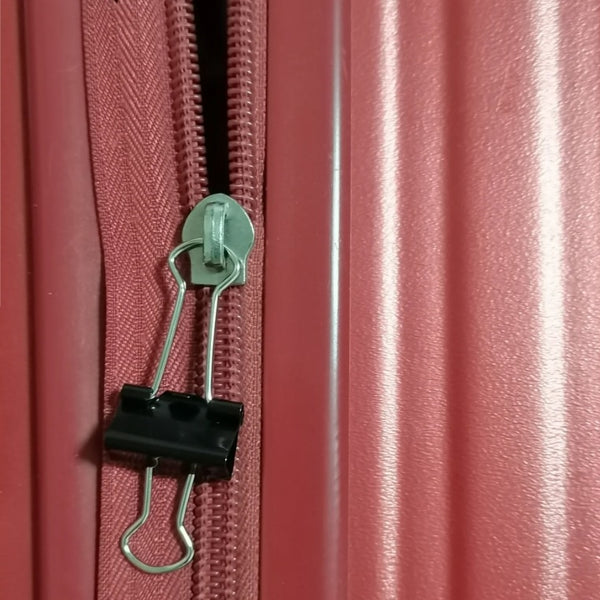
ZippersZipper are necessary parts for opening and closing a suitcase, but if they are pulled too hard or caught, they may not open or close properly. If your zipper breaks, here's what to do:

- If the zipper pull is broken, you may be able to open it by threading a string or wire through it instead. However, this method may also cause the zipper's anti-slip properties to become ineffective.

- If the zipper won't close
- If the zipper teeth are misaligned, you can sometimes fix them by pulling on both ends of the zipper with force. However, if you're not careful, you could end up damaging the zipper further.

- If a zipper tooth is chipped, you may be able to repair it by cutting off the chipped part with pliers or a cutter, and then sewing the end of the zipper back in. However, this method will shorten the length of the zipper, which may reduce the amount of luggage you can fit in your bag.

- If the zipper snaps are broken, you may be able to close it by inserting tweezers or a toothpick into the snap and pushing and pulling. However, this method may damage or dislodge the zipper teeth.

- If the zipper has come off, you can temporarily secure it with tape or thread. However, this method weakens the zipper, increasing the risk of items falling out or being stolen. We recommend taking the suitcase to a repair shop immediately or purchasing a new one.

If you can't figure out why the zipper won't close, we recommend taking it to a professional repair shop or purchasing a new suitcase.

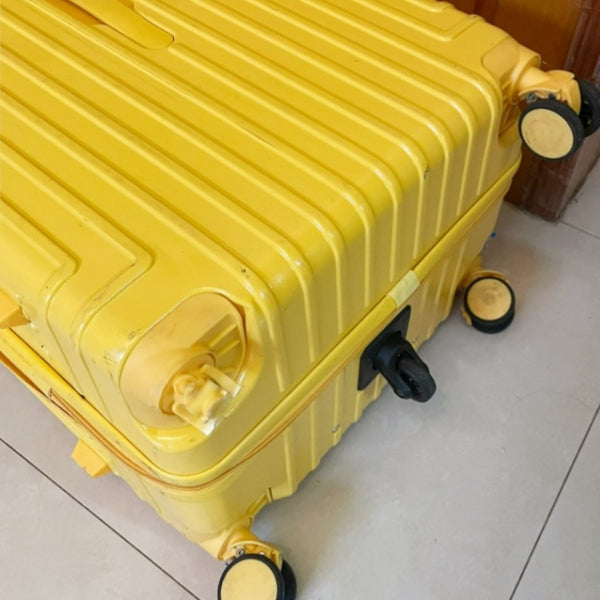
Casters Casters play an important role in moving a suitcase, but they can break or come off due to impact or wear. If a caster breaks, here's what to do:

If a caster comes off


- If the casters are screwed in place, you may be able to repair them by tightening or replacing the screws. Check to see if you have tools such as a screwdriver or if there is a tool rental service nearby.
- If the casters are riveted in place, it will be difficult to repair them yourself. You will need special tools to remove the rivets, and it will take strength and skill to drive the rivets back in. In this case, we recommend taking it to a specialized repair shop or purchasing a new suitcase.

If the caster is broken


- If a caster is cracked or chipped, continuing to use it may make the problem worse. It may also scratch the road surface or make noise. In this case, the caster needs to be replaced. Replacement casters can be purchased online or at home improvement stores, but be sure to pay attention to the size and shape. Also, when replacing them, follow the instructions above.

- If the casters no longer turn, it is possible that the bearings are clogged with foreign matter or rust. In this case, removing the casters and cleaning and oiling the bearings may solve the problem. However, if the bearings are damaged, they will need to be replaced.

Handles Handles are essential for lifting and pulling your suitcase, but they can bend or break if too much force is applied or they receive a shock. If your handle breaks, here's what to do:

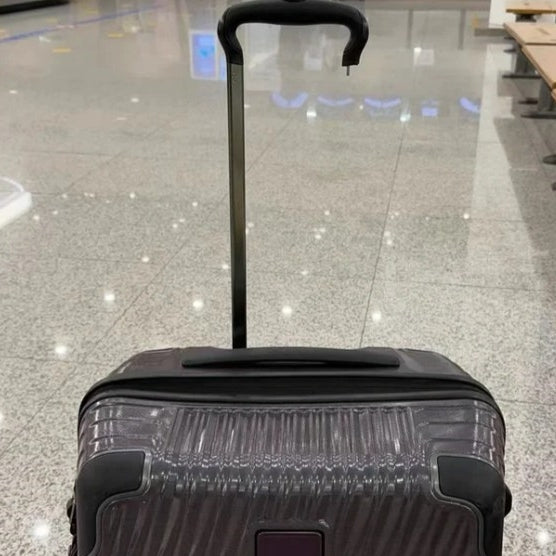
- If the handle is bent


- If the handle is made of metal, you may be able to restore the bent part by hitting it with a hammer or something similar. However, if you are not careful with the amount of force you use, you may end up damaging the handle even more. You may also scratch or dent the surface of the handle. In this case, we recommend wrapping the handle with tape or cloth to protect it.
- If your handle is made of plastic, you may be able to heat it to soften it and return it to its original shape. However, if you are not careful with the heat source, you may melt or burn the handle. This may also cause the handle to change shape or color. In this case, we recommend wrapping the handle with tape or cloth to protect it.

If the handle breaks


- If the handle is completely broken, it is difficult to repair. In this case, we recommend purchasing a new handle or a new suitcase.
- If the handle is partially broken, you may be able to fix it with glue or tape. However, this will weaken the handle and increase the chances of it breaking again. It will also look worse. In this case, we recommend buying a new handle or a new suitcase.

Above, we have introduced what to do if your suitcase breaks and won't close. It can be a real hassle if your suitcase breaks while you're traveling, but by using the above first aid methods, you may be able to enjoy your trip a little more. However, first aid is only temporary. Depending on the cause of the suitcase breakage, repair or replacement may be necessary. In that case, what kind of suitcase should you choose?

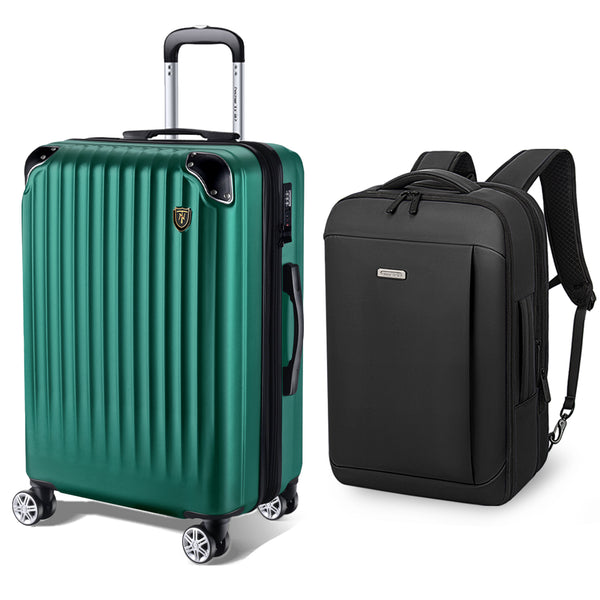
I recommend suitcases from the New Trip brand. New Trip suitcases have many attractive features, including expandable capacity, high impact resistance, sophisticated design, and quality testing results.

For example, New Trip suitcases are zippered. Zippered suitcases are convenient when you have a lot of luggage, as they can increase capacity by 20% by expanding the gusset width. They also use Japan's world-renowned YKK zippers, which prevent zipper malfunctions.


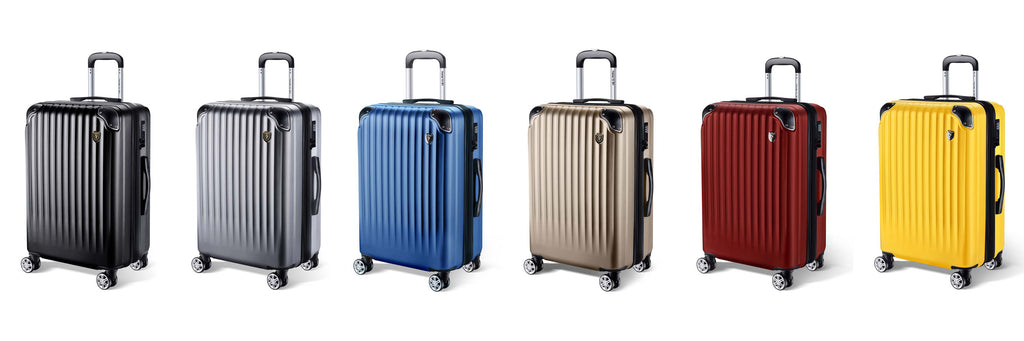
New Trip suitcases come in a wide variety of colors and sizes, so you can choose one that suits your tastes and purposes. Plus, if you purchase from our store, New Trip members can enjoy special benefits like free shipping and discount coupons.

Image link: https://newtrip.online/collections

I tried a New Trip suitcase and was very satisfied. It was light, durable, easy to use, and convenient. Why not give a New Trip suitcase a try? I'm sure it will become your travel partner.

Of course, it's best to prevent your suitcase from being damaged, but it's also important to be prepared in case something does happen. Your suitcase is your partner that will protect your precious belongings. Be sure to check the condition of your suitcase and take out insurance before your trip. Now, have a wonderful trip!
I hope this information is helpful to you.