
New Trip編集部 更新日: 2026.06.04

Suitcase Interior Dimensions and Capacity Guide | How to Choose the Right Size and Real-World Measurement Data

Title

When choosing a suitcase, many people

"It's carry-on size, so it's fine," or "It's only for x nights, so this should be fine."

We tend to make our decision based solely on the external dimensions (visual size) listed in the catalog.

But when I started packing,

"It doesn't hold as much luggage as I thought it would." "The protruding carry bar gets in the way, and I can't place my laptop flat."

Troubles like this continue to occur.

In fact, what determines the "usability" of a suitcase is,

This is not the external size, but the internal dimensions (usable internal space) .

In this article, we will explain in detail from a professional perspective how to determine the ``inner dimensions'' to avoid making any mistakes.

table of contents

\500 yen off for readers only/

Sign up for New Trip's email newsletter and receive a ¥500 OFF coupon that can be used on all products!

Coupon code: NT500

Simply enter your information on the payment screen, and you can get a great deal on your new travel companion.

Thank you for subscribing!

一、内寸・外寸・容量の違い

Suitcases have two different dimensions: "external dimensions" and "internal dimensions."

Understanding this difference is the first step in preventing failure.

1. 外寸: 航空会社の規定

  • Definition: This refers to the maximum length including all protruding parts, such as casters, handles, and side legs.
  • Role: Mainly for airline checks. The size acts as a "pass" to determine whether an item can be carried on board or whether there is an additional charge.

2. 内寸: 実際に荷物が入る「有効スペース」

  • Definition: The length of the space inside the case when it is opened that can actually hold luggage.
  • Function: Your storage capacity. Clothes, souvenirs, PC cases, etc. are the practical size that determines "how much more you can fit in."

3. 容量の計算方法と、表記の裏側

Generally, suitcase capacity is calculated using the following formula:

  • Calculation formula: Internal dimensions (width x height x depth) ÷ 1,000 = capacity (L)

The thing to pay attention to here is the storage part of the carry bar (the unevenness on the inside).

Many manufacturers do not take this "bumpiness" into consideration and simply calculate and indicate the volume.

However, in reality, this protrusion creates dead space, so even if the numerical capacity is the same, suitcases with a flat interior design are overwhelmingly easier to pack.

Title

二、同じ容量でも収納力が違うのはなぜ?

Even if the suitcases have the same external dimensions, the "size" can be completely different when you actually put your luggage inside.

The difference lies in the following three design points:

キャリーバーの出っ張り

The back of the suitcase has a rail for storing the extendable carry bar.

  • Effect on internal dimensions: The flatness of the bottom surface changes depending on how far this rail protrudes inward.
  • Packing tips: If the bar has bumps, you will need to stuff soft items like socks or underwear into the gaps to make the bottom flat.

ケースの形状

The casters are attached to the bottom corners of the body, but their bases are recessed into the inside of the case.

  • Impact on internal dimensions: Casters with large, impact-resistant wheels or complex shock-absorbing mechanisms tend to reduce the inner corners (creating dead space).
  • How to tell: Open the bag and look at the four corners of the bottom. The extent to which the base of the casters protrudes will determine whether you can pack your belongings all the way to the corners.

フレームタイプとファスナータイプ

The strength of the material used for the body is directly related to the "wall thickness."

  • Impact on internal dimensions:
    ABS resin, etc.: Thickness may be required to provide strength, which may result in slightly narrower internal dimensions.
    PC (polycarbonate) blended material: Because it maintains strength even when thin, it is possible to finish the walls thinly. This difference of a few millimeters translates to a "difference in volume of several liters" when viewed as a whole case.
  • Flexibility: If the material has elasticity (flexibility), it has the advantage of allowing for some flexibility even when the bag is packed full.
Title

三、容量別にどれくらい荷物が入る?

スーツケース選びでよくあるのが、

「40Lって実際どれくらい入るの?」
「60Lなら1週間旅行に足りる?」

という疑問です。

ここでは容量ごとの収納イメージを紹介します。

容量 宿泊目安 収納例 特徴
30〜40L 1〜3泊 夏服5〜6セット
下着・靴下
洗面用品
13インチ前後のノートPC
小さなお土産
機内持ち込みサイズの主流容量。国内旅行や出張で最も使われるサイズ帯。
50〜60L 4〜6泊 衣類7〜10セット
スニーカー1足
洗面用品
折りたたみ傘
お土産スペース
荷物量と持ち運びやすさのバランスが良く、国内・海外問わず人気のサイズ。
70L前後 約1週間 衣類10セット以上
ジャケットやセーター
スニーカー
お土産
ガジェット類
1週間前後の旅行で人気。冬場でも比較的余裕を持ってパッキング可能。
90L以上 長期旅行 冬物衣類
厚手のコート
靴2〜3足
大量のお土産
家族分の荷物
長期滞在や海外旅行向け。本体重量が増えるため航空会社の重量制限に注意。

📚New Trip編集部メモ:容量はあくまで目安です。

同じ60Lでも、内寸の形状や収納構造によって実際の収納力は変わります。購入前は容量表記だけでなく、内寸サイズや収納スペースの設計も合わせて確認することをおすすめします。

Title

四、New Tripモデルの実測データ

We've compiled information on the "actual space" that's often difficult to grasp from catalog dimensions alone, using popular New Trip models as examples. Please compare it to the amount of luggage you have.

(*Internal dimensions are approximate based on actual measurements. There may be slight variations depending on the shape.)

モデル (サイズ) 実測内寸 (約) 容量目安 実際のパッキング例
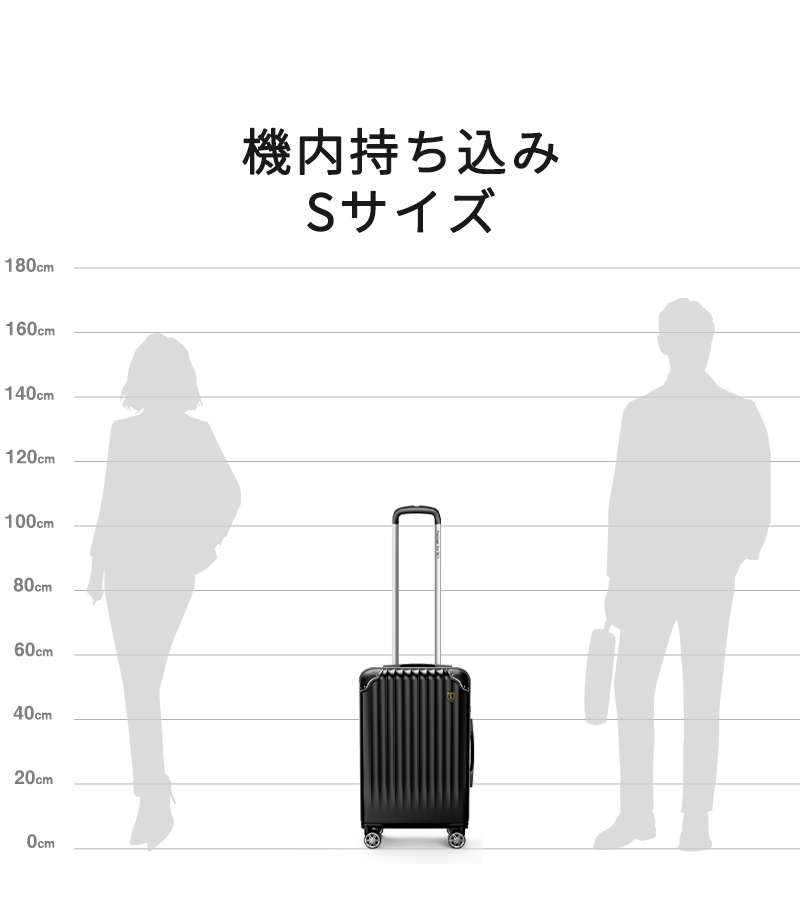
0201Plus (Sサイズ) 47 × 33 × 25 cm 約38L 1〜3泊:夏季衣物6〜8枚、13インチPC、洗面ポーチ
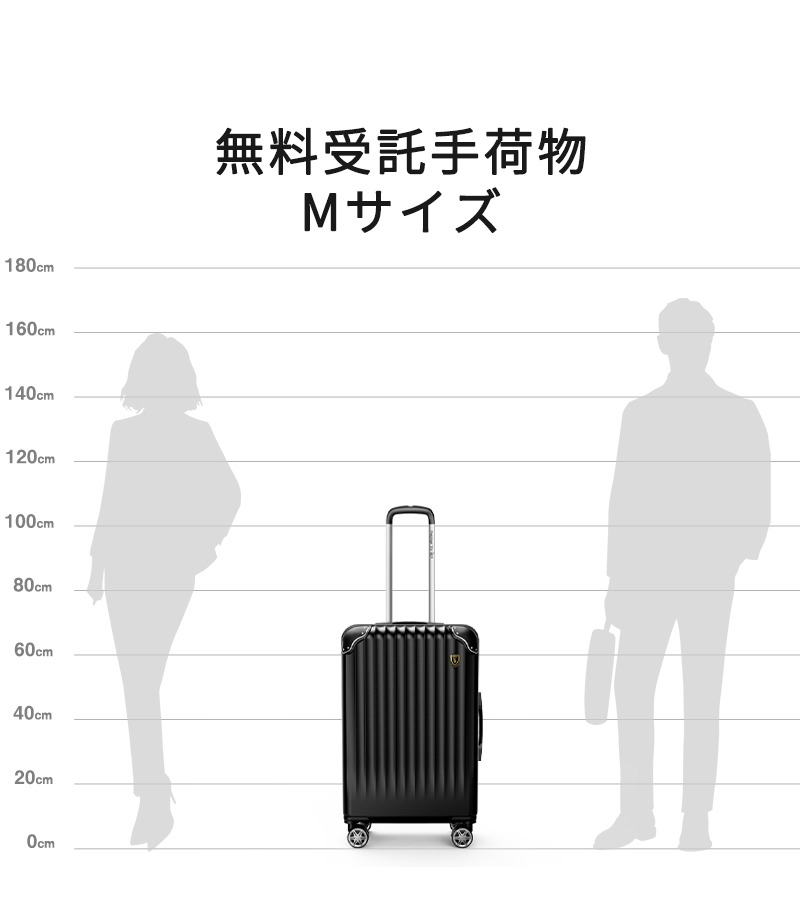
0701Plus (Mサイズ) 56 × 40 × 26 cm 約58L 4〜7泊:春秋服10枚以上、予備の靴、お土産スペース
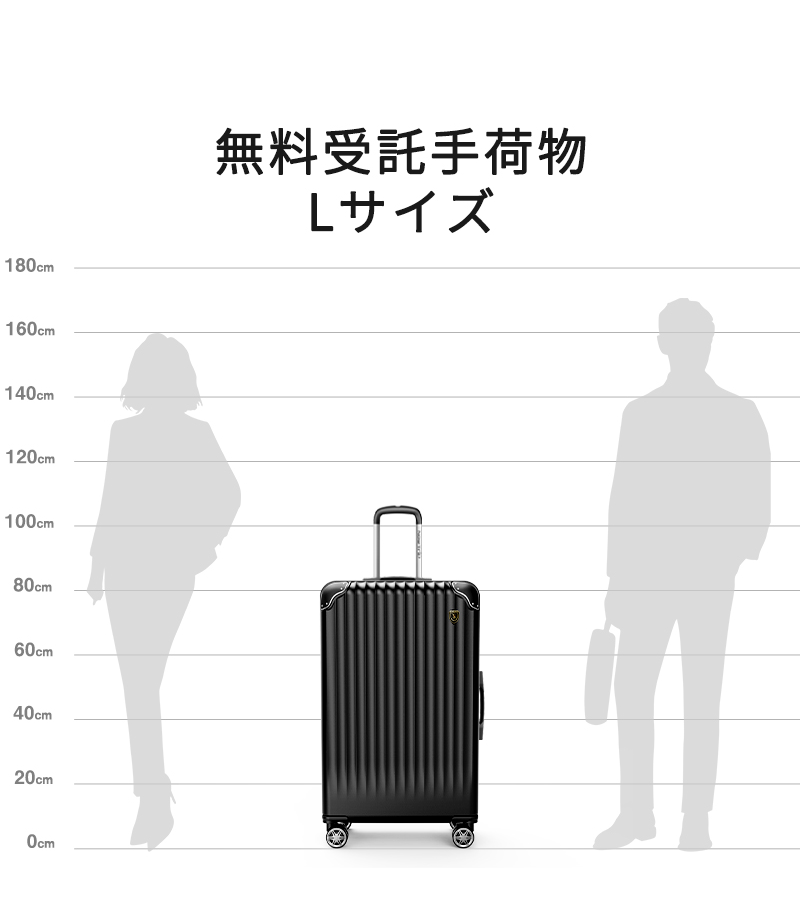
0502 (Lサイズ) 68 × 47 × 31 cm 約99L 長期・海外:冬服4〜5枚、厚手のコート、家族分の荷物

How to read the data and key points

  • S size: With a thickness of 25cm, it can accommodate luggage that is deeper than it appears, despite being carry-on size.
  • M size: The width is 40 cm, so it is designed to make it easy to pack standard clothing cases (M size) side by side.
  • L size: With a depth of 29cm, it can easily accommodate thick items such as boxed souvenirs and bulky snowboard wear.
Title

五、収納力を最大化するパッキング術

Once you know the internal dimensions, the next important thing is to figure out how to use that space efficiently.

Here are three techniques to help you make the most of your limited space.

キャリーバーの凹凸を活用する

The unevenness of the carry bar at the bottom of the suitcase may seem like a nuisance at first glance, but it is actually a great point for storing items in narrow spaces.

  • Tips for filling: Fill the recess with rolled up socks, underwear, a belt, or even a spare towel.
  • Effect: By filling in the grooves, the bottom becomes flat, making clothes or cases placed on top more stable and less likely to wrinkle.

四隅から荷物を配置する

To make the most of the interior dimensions, the golden rule is to place your luggage from the corners rather than from the center.

  • Reason: If the corners of the caster base are slightly rounded, there will be gaps when you try to fit a square case in at the end.
  • Solution: Place pouches containing small items like charging cables, or soft clothing, in the corners first, tucking them in first. This will help minimize dead space.

容量の10〜20%は空けておく

If you use up 100% of the internal dimensions when you finish packing, you won't be able to fit in all the souvenirs you collect while traveling.

  • My personal rule: Ideally, when departing, keep the contents to 80-90% of the interior dimensions.
  • Expandable feature for emergencies: If you anticipate having more luggage, choose a model with an expandable (capacity expansion) feature to physically increase the internal "depth" of your bag.
Title

六、まとめ

The biggest tip for choosing a suitcase without making a mistake is to check the exterior dimensions for the rules and the interior dimensions for yourself .

  • Don't judge by the "L (capacity)" number alone
  • Imagine the unevenness of the bottom surface and the shape of the corners.
  • Choose the "actual value" that suits your travel style

Choosing a suitcase with the correct internal dimensions will reduce packing stress and greatly improve the quality of your trip.

Find the perfect companion for your trip with New Trip .

Title

六、FAQ(よくある質問)

Q1. 内寸と容量は同じですか?

A1:いいえ、同じではありません。内寸は実際に荷物を収納できる内部サイズ、容量はその空間の大きさをLで表した数値です。収納力を比較する際は、容量だけでなく内寸も確認しましょう。

Q2. 同じ60Lなのに収納力が違うのはなぜ?

A2:内装設計や内部構造が異なるためです。キャリーバーの出っ張りや内部ポケットの配置によって、実際に使えるスペースは変わります。

Q3. フレームタイプとファスナータイプで内寸は違う?

A3:一般的には、同じ外寸ならファスナータイプの方が内寸を広く確保しやすい傾向があります。一方で、フレームタイプは耐久性に優れています。

Q4. ノートPCは内寸何cmあれば入りますか?

A4:13インチなら横幅30cm前後、15インチなら35cm前後が目安です。PCケースを使用する場合は余裕を持ったサイズを選びましょう。

Q5. お土産スペースはどれくらい残しておくべきですか?

A5:容量の10〜20%程度を空けておくのがおすすめです。60Lなら6〜12L程度の余裕を確保すると安心です。

執筆・監修

New Trip編集部
本記事は、スーツケース・旅行用品ブランド「New Trip」の編集部により制作されました。
製品開発やユーザーの声を活かしながら、ユーザーに合ったスーツケースや、旅行・出張をより快適にするアイテムを発信しています。